Posted by: Fr Chris | September 13, 2023

Triumph of the Cross

Christ exhorted his followers to take up their crosses and follow him. To do so means to give up of oneself, just like Heraclius had to give up the signs of his power and wealth. Saint Barsunuphius the Great emphasized that when we carry our own crosses, we are mystically helping Jesus in His Passion when He carried the heaviest cross ever made, the cross through which the human race would be saved, and that by so doing, we are preparing to be His servants in the choir of heaven.

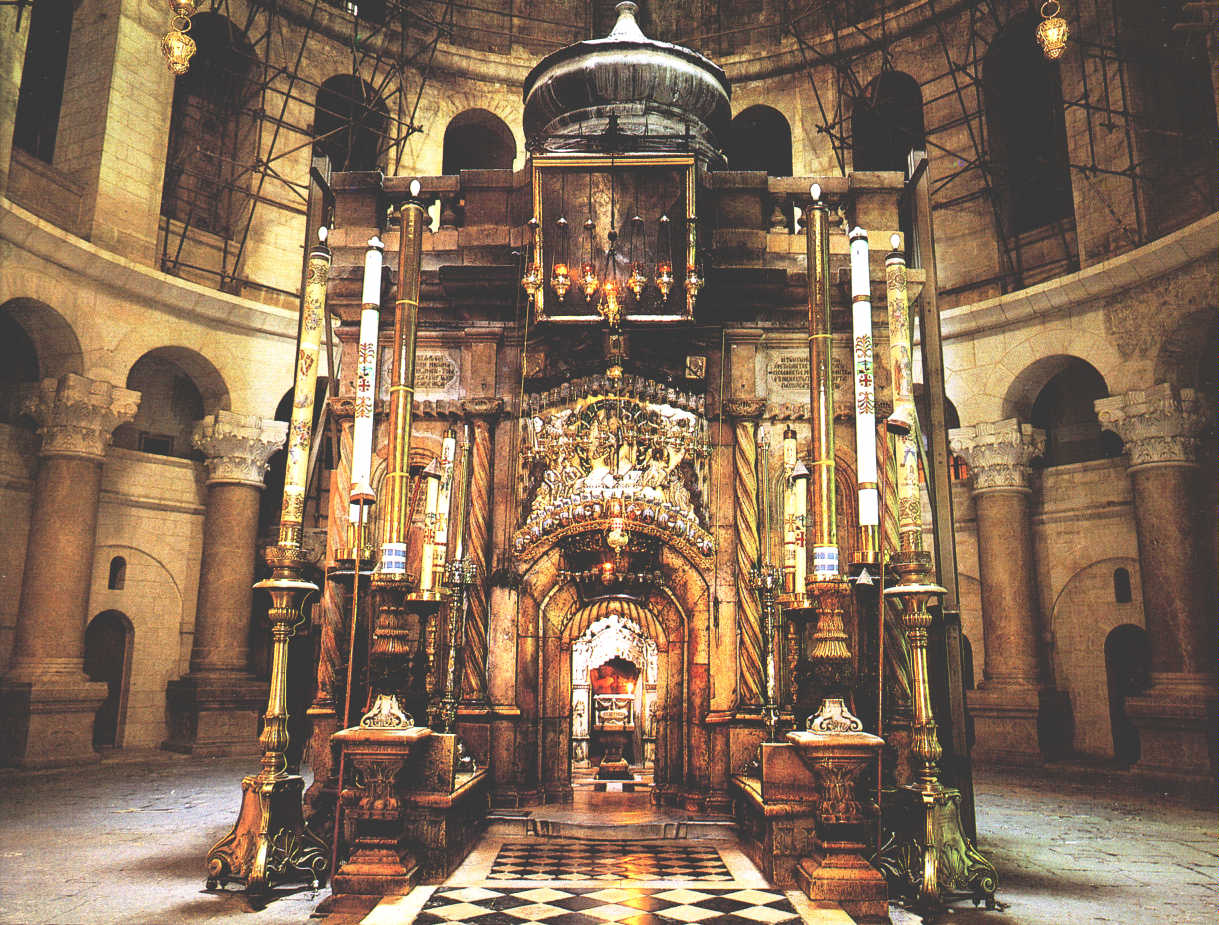
In the morning services on September 13, we commemorate the dedication of the Church of the Resurrection, known more commonly as the Church of the Holy Sepulcher. This shrine contains both Mount Calvary where Christ was crucified, and the adjacent grave donated by Joseph of Arimathea. Cross and resurrection are intertwined – there is no Easter Sunday without Good Friday, and the sorrow of Good Friday always leads to the joy and power of the Resurrection.
That promise of Saint Barsanuphius is most fitting therefore: what could be greater than to achieve eternal life with our Crucified and Risen Lord in glory? At the end of time, Christ will raise the dead, bringing the souls of those in glory to be reunited with their restored bodies that were left behind at death. The paradox of the message of the Cross is that it is not what it seems to be, an instrument of humiliation and death, but rather it is the instrument of joy and life, life that is eternal.

The Old Testament readings for this feast give a series of foreshadowing of the cross as our instrument of salvation, and the Christian looks at those events and sees that paradox of the Cross at work.

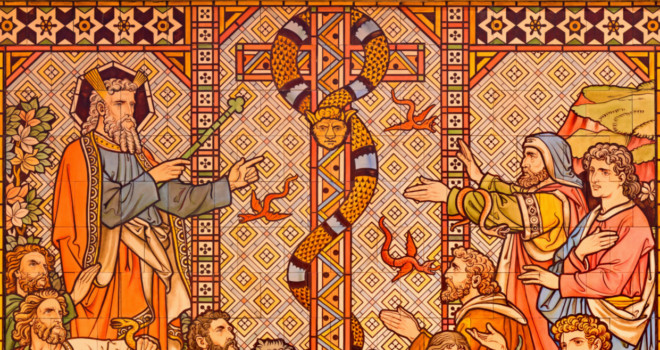
In Genesis we read about the tree of Eden, by which we were lost (the tree of the Cross saves us); Noah’s ark brings about the salvation of the just ( while the Cross offers salvation to sinners); Jacob crosses his hands to bless his grandsons Ephraim and Manasseh, the sons of the patriarch Joseph. In Exodus Moses repeatedly opens his arms in the shape of a cross, and uses wood. He extends his arms to open a dry path through the Red Sea as a door of salvation to the Israelites; he throws wood into the waters of Mara to sweeten its bitterness, as the Cross which should be a bitter instrument actually is healing; Moses strikes the rock with his staff to make life-giving water spring forth, as on the Cross Jesus’ life-giving blood and water pour out; Moses prays with hands crossed, for the victory of the Jewish people over Amalek. Aaron’s rod of dead wood blossoms into new life, just as the supposed dead wood of the Cross actually brings spiritual life; and the bronze serpent made by Moses brings healing to those bitten by the poisonous serpents, as the cross brings life to us who have been bitten by original sin.
In the early Church, making the sign of the cross was so important that it was considered as the 8th sacrament. Saint Cyril of Jerusalem exhorted his congregation to make it on their foreheads, over their food and drink, when going to sleep and getting out of bed, when traveling, even when going in and out of the house or shop. He called it the Sign of the faithful, and the dread of devils: for Jesus triumphed over them in it, having made a show of them openly for when they see the Cross they are reminded of the Crucified; they are afraid of Him, who bruised the head of the serpent.

The story of the discovery of the Cross in Jerusalem says that it was applied to a sick woman who was cured, and to a dead man who was restored life, showing that it is indeed the life-giving Cross: just as it gave life to those two people so it brings life to our souls. When the army of the Emperor Heraclius recaptured the True Cross from the pagan Persians in 614, the emperor tried to carry it back into the church of the Holy Sepulcher. But the story of that event says this: the Emperor, magnificently dressed and wearing gold, was stopped by an invisible force. Zachary, the patriarch of Jerusalem, said to him: “Be careful, Emperor, because with these ornaments of triumph, you don’t imitate sufficiently the poverty of Jesus Christ and the humility with which He carried His Cross.” The Emperor laid aside his splendid clothes to dress himself in an ordinary cloak, and with bare feet, he was able to continue on his way.
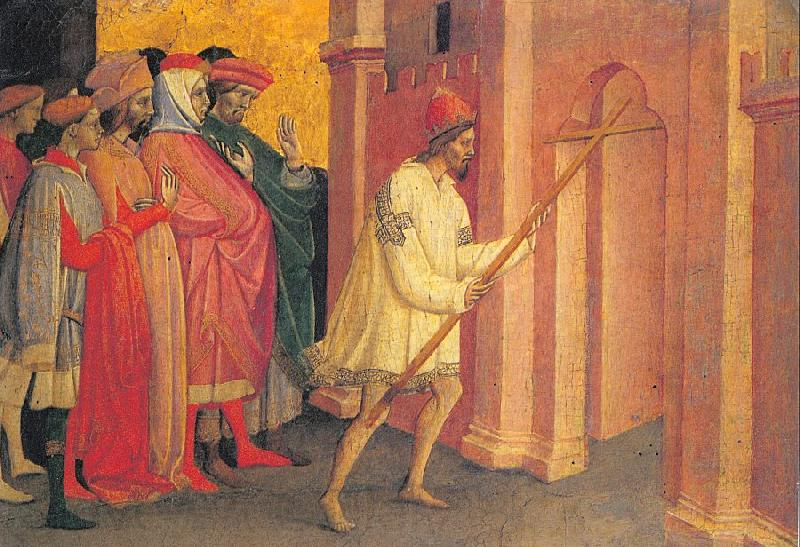
Once again, we see the paradox at work – power, gold, and wealth were actually what kept Heraclius out of the shrine. Only by lowering himself in the eyes of the world, by going barefoot and in plain clothing, could he return the True Cross to Mount Calvary inside the shrine. And that action raised him up in the eyes of God, so that the invisible barrier in the doorway was removed, and he could go inside and worship Christ our God at those two powerful places: the site where the Lord died for us, and the site where the same Lord rose for us.

The same holds true for us in the spiritual life – if we are keeping ourselves powerful in the eyes of the fallen world, if we are ashamed of wearing the cross or blessing ourselves with the sign of the cross, then we are going to lose our way. If we hold firm throughout all of our sufferings, if we hold firm despite the temptation to abandon Jesus and His teachings and His Church, if we hold firm through the power of the Cross, then we will find our way to glory, and into the waiting embrace of the Holy Trinity at the time of our passing from this life to the life that awaits us. Christ is among us.
Posted by: Fr Chris | September 9, 2023

Nativity of Mary

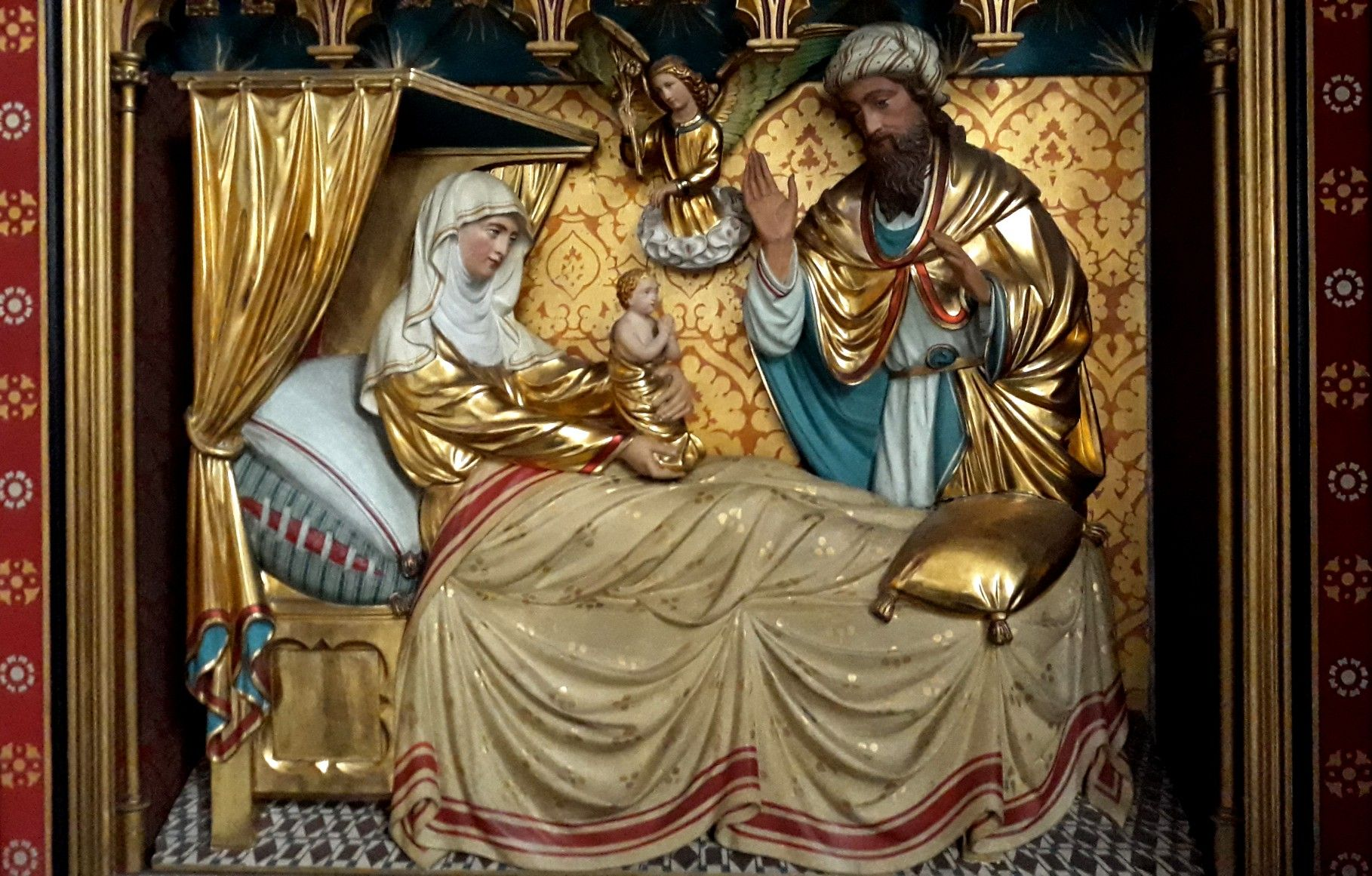
Today is the first big event of the liturgical year. We start the liturgical year with the birth of Our Lady, and we end it in August with the Dormition and Assumption of Our Lady. One could ask why we celebrate the births of the Virgin and of John the Baptist. The Baptist, celebrated in June, is because he is the last of the prophets, and the one who announces Christ. Our Lady, the Blessed Virgin Mary, is of course the woman who will conceive, carry and give birth to Christ. But there is more to her role than that. She is also the New Eve, the Mother of the Church, and the first disciple of Jesus. Elizabeth praises her at the Visitation as recounted in Luke, when she affirms to Mary that she is the Theotokos, the Mother of God, when Elizabeth asks Who am I, that the mother of my Lord should come to me? The word used by Elizabeth is Adonai – the Lord our God – and so she gives Mary her first confirmation after the Annunciation that all that was promised by Gabriel is true.

The legend about Mary’s parents is exactly that, a legend. It is not in Scripture, but rather in the book called the Protoevangelium of James. That is a mixture of fantasy, some scripture, Jewish tradition, and Greco-Roman practices. But it captured the imagination of people, and is the origin of the names of Mary’s parents being Joachim and Ann, and that Mary is supposedly born from the house of David after her parents could not have a child. But like all religious legends, it communicates a message, and in this case, it is a message of marital fidelity, abiding love, and God’s faithfulness. According to the story, Ann could not conceive, but rather than divorce her or take a second wife, Joachim loves her too much to do so. Instead, they keep praying, and like Abraham and Sara and Zachary and Elizabeth, their prayers are finally answered in their old age. God grants them the gift of not only a child, but a child who will give birth not just to the messiah, but to the very Son of God!

Whoever Mary’s parents were, what we can say for certain is this, that the couple living in Nazareth who raised her, did so very well. They had to be devout Jews, they had to be loving parents, and they had to be supportive parents. Mary is conceived without original sin, but raised in a family that had to be so prayerful, so good, that she grew up surrounded by good examples of people who inspired her to continue in both physical and spiritual purity.

Saint Andrew of Crete says of this feast day that Mary is the created temple for the Creator of all; and creation is readied into a new Divine habitation for the Creator. Adam offers from us and for us the worthiest fruit of mankind — Mary, in Whom the new Adam is rendered Bread for the restoration of the human race.

Here is the key, that in our Blessed Lady we celebrate the beginning of the fulfillment of God’s promise to the original Adam and Eve in Genesis, that all will be made well through God’s mercy, and the doors of heaven reopened to the human race. As God was faithful in the legend to Joachim and Ann, and in Scripture to Abraham and Sara, Zachary and Elizabeth, He is faithful to us. All of those people persisted in praying and in trusting God, as must we. Mary herself fully trusted in God and His Word at the Annunciation, as must we.

God does what He promised to Abraham and David, and this birth is the dawn of that promise being fulfilled. This feast prepares us to fully understand the incarnation at the Annunciation and the complete meaning of Christmas as the birth of the Son of God made man. May we be faithful to God as Mary was, as her family surely must have been, as the patriarchs and matriarchs of the Old Testament were, and may we put our confidence in her for her intercession on our behalf.

Posted by: Fr Chris | August 29, 2023

Paying the Price: Beheading of St. John the Baptist

How many inches are in one foot?  How many feet in one yard?

How many feet in one mile? If I say there are 5 inches in a foot, and 2 feet in a  yard, and 520 feet in a mile, does that make it true? No, obviously not.

In the same way, proclaiming that something wrong actually is good does not make it true.

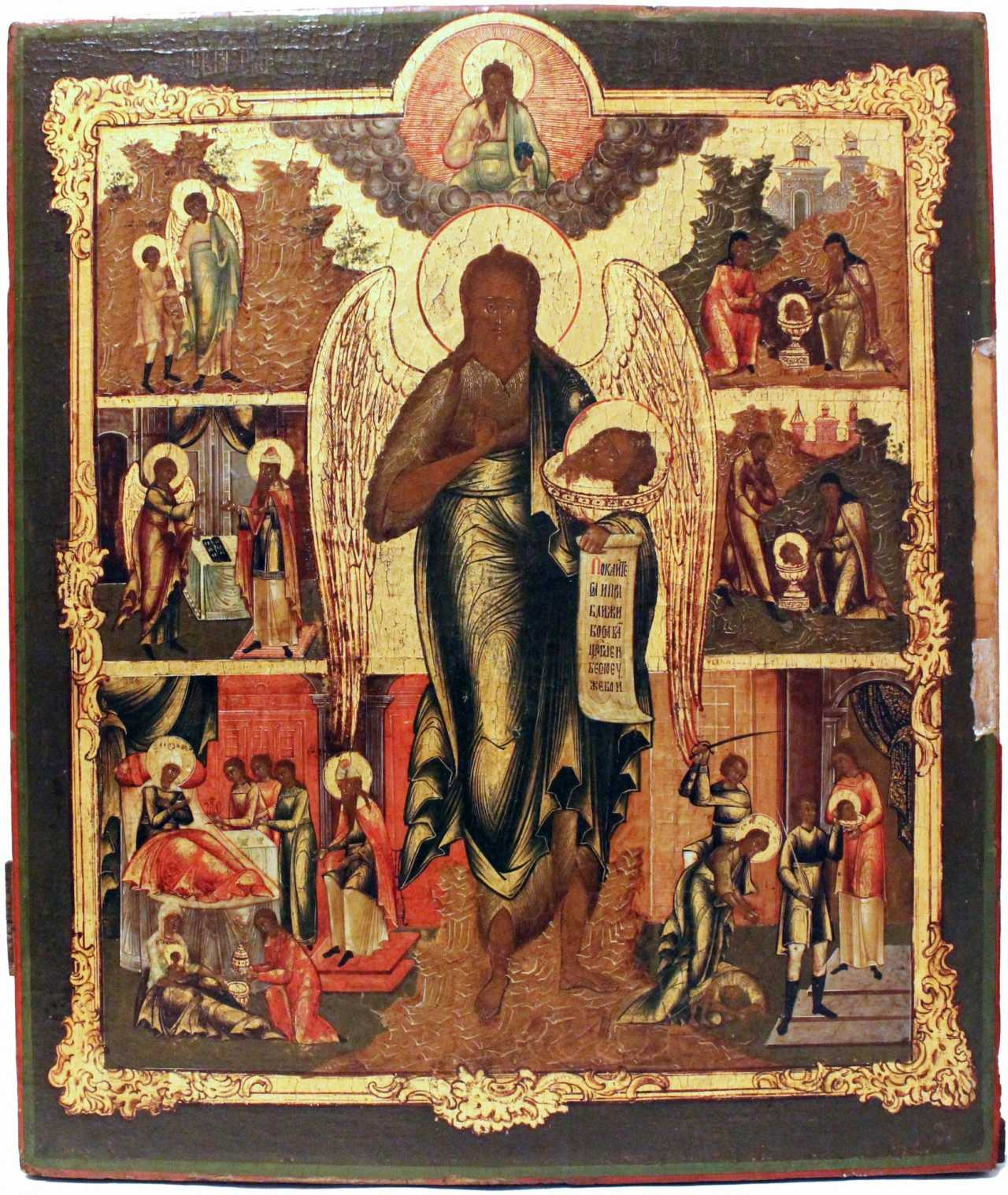
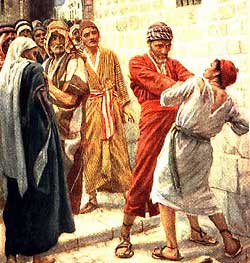
John died because he insisted on preaching that Herodias and Herod Antipas were not married according to God’s law, and that by Jewish law and ethical standards not only were they not married, but their union together was a scandal to both the Jewish people and their neighbors. Herodias had divorced her royal husband and left with their daughter. This so-called marriage caused a war with the king of Nabataea, Rome had to intervene in the mess, and ultimately Herod and Herodias were deported to Europe where they died in exile. As for the unnamed princess who performed a dance that delighted the guests, the fact that the princess Salome from the royal family would perform any kind of a dance in front of the men at a birthday dinner shows just how wicked and corrupt the court of Herod Antipas had become. She should have been sequestered with her mother and the other women of the royal court in their own area, and certainly not performing in front of Herod Antipas and other men. When movies and operas show Salome dancing in a very suggestive manner and the men clamoring after her, it is unfortunately accurate as to what probably happened. John obviously condemned the conduct of Herodias, and so she demands his murder at the hands of the king. Herod did not have the moral courage to refuse the wish of his illegal wife and proclaim that murdering a prophet would offend God – as a result, John is considered a martyr for truth, and a martyr in defense of marriage.

Saying that something is so does not make it true, but that is a hallmark of the morally confused times that we live in. Pope Benedict XVI warned about “the dictatorship of relativism” and the denial of moral truths. The writer Aldous Huxley predicted in 1932 in Brave New World that the coming modern world would be one filled with false truths and be a world that would deny truth. It is incumbent on Christians therefore, and especially the Catholic Church, to hold the line when it comes to morality. Truth is not always popular, and that seems to be the case in our world today. But it’s interesting to note that there are now Protestants and of course most Orthodox who support Catholic teachings. We may feel like voices in the desert, but we are not truly lonely ones, since there are other Christians also holding to these values.

And of course, no Christian is ever alone – the Lord always stands spiritually with us, just as He did with the three holy youths in the furnace, with Peter in the storm, and with John the Baptist that day in the prison.

It’s a challenging time to be a Christian, a time when Western society seems to be drifting from its moorings, in the name of tolerance while ironically becoming more and more intolerant of the very Judeo-Christian religious tradition that created Western society and the requirement for tolerance. Going back to Benedict XVI again, though, here is another point he made. The truth comes to rule not through violence but through its own power. When Jesus stood before Pilate, Saint John the Evangelist tells us in his gospel that Jesus professes that he is the truth, not through legions of angels but through his Passion. The Church has to live out its own truth, the truth of Christ, and it is not easy to do that. May we have the courage to do that, in these odd times when in the name of tolerance, tolerance for the historic truths of the Church is abolished. Pope Benedict pointed out that we do not force people to become and live as Christians, and by the same token the new secularist religion has no right to force anyone to live by its new standards and make it obligatory for humanity.

Let us ask the intercession of Saint John the Baptist that we would be authentic missionaries of Christ Jesus and of the truths of the Church which Christ founded, even in these challenging times. Christ is among us.
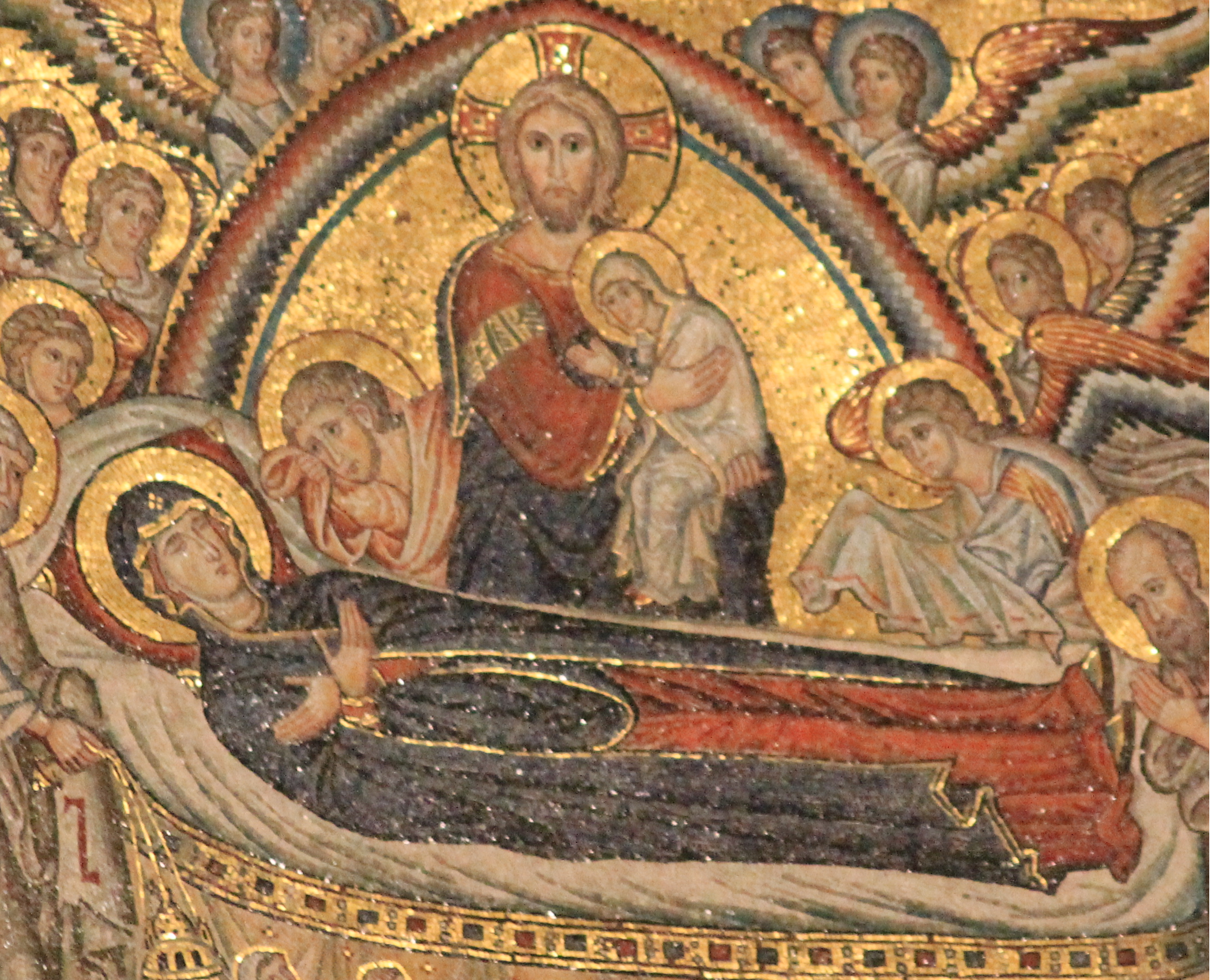
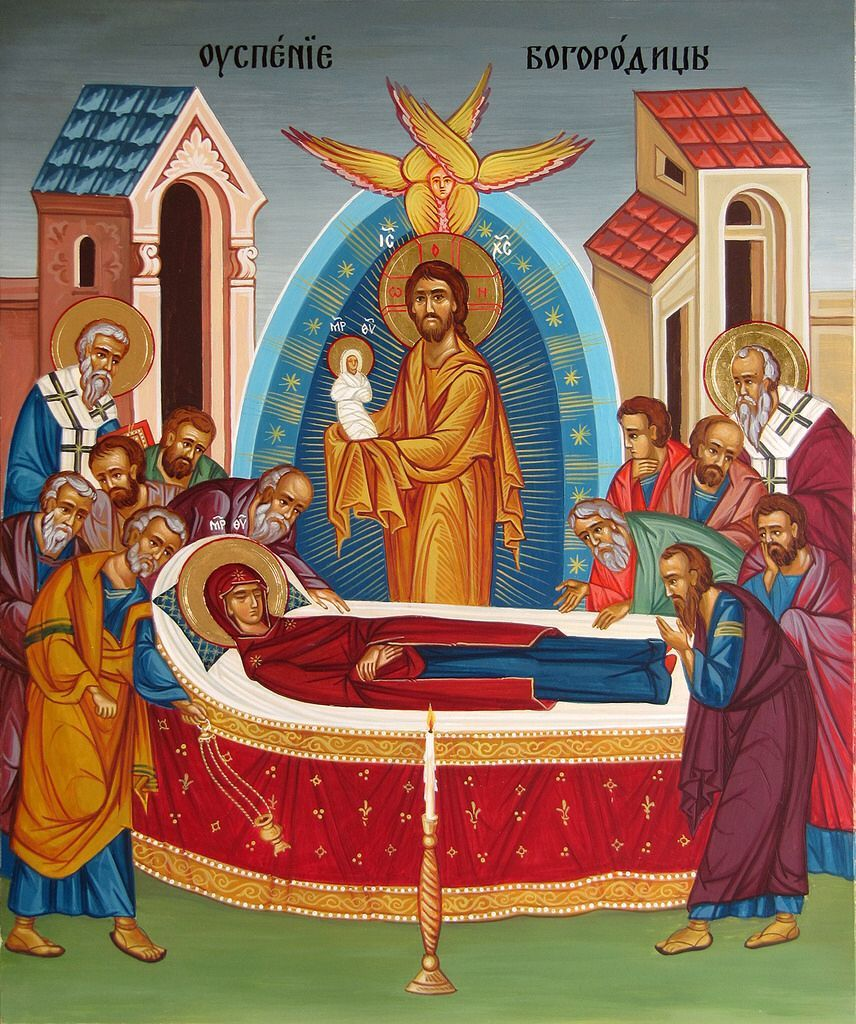
One thing that the Catholic and Orthodox Churches are known for is their devotion to Mary. Catholics  and Eastern Orthodox all pray to the Virgin Mary, asking her intercession with God. Another thing we are known for is an attachment to relics. There are first-class relics of saints, little pieces of their bones. There are second-class relics, items that belonged to saints, especially clothing. And finally, there are the little third-class ones, pieces of cloth touched to a relic. In Churches that have nurtured devotion to relics since the first century of Christianity, we have no first-class relics of Jesus or of his mother Mary. Right there are proofs for the Resurrection of Christ and the bodily assumption of Mary into heaven. There is a cloth, which is claimed to be her belt, that is kept in Italy, but that’s it. The Dormition refers to her falling asleep in the Lord, to her dying. The icons all show her lying on her deathbed, with Jesus holding her soul and coming to lift up her body and take it to heaven. That of course is the main part of this feast, her bodily assumption and reunification of her body and soul.

There are all kinds of blessings associated with this feast – in central Europe one can partake of blessings of fields, farms, and livestock; in Germany and Italy there is the blessing of herbs, and fruit; in southern Europe and parts of the American coast in places like Louisiana and Georgia there are blessings of boats; in Armenia it’s the day to bless the grapes harvested from the vineyards. The idea is that our Lady’s assumption into heaven, body and soul, should be an occasion of great joy and celebration, a time for the Church to really celebrate. The blessing of the herbs is a reminder that Our Lady intercedes for the sick because she is untouched by the decay of death, through the mercy of God, but like us, and like her Son, she had to die.

The Dormition of Mary is a sign to all of our destiny – to be raised in our bodies, and to be reunited body and soul, in fulfillment of what we profess in the Nicene Creed – that we believe in the resurrection of the dead. Although our Lady would have been rather elderly by the standards of the first century, in all of the accounts of her apparitions, from the 200s on, Mary is always described as being  young, beautiful, and gracious. Here is the example of how we will be after the resurrection of the dead – our glorified bodies will not be restored to the condition they were at our deaths, but rather to the state of beauty without the disfigurement caused by the wounds of sin.

It also confirms science – mothers carry their children’s DNA in them after birth, especially in the heart and blood, and in particular male DNA is carried in mothers’ brains. Jesus was true God and true Man, and so Our Lady would have carried his DNA and fetal cells in her, from a body that could never decay or experience corruption. In the Divine Office it says that God did not allow her to undergo corruption, and that is certainly the case not only in terms of dogma but also of medical science.

Mary’s Dormition and Assumption confirm her immaculate conception – she went straight to heaven, body and soul, not subject to corruption. It confirms her unique connection with God, spared from the corruption of death that original sin brought about. It confirms her as the Theotokos – she is not subject to decay precisely because of her role as the Mother of the Incarnate Lord, as God honors her and preserves her. Jesus’ resurrection defined Christ’s victory over sin and death, and Mary’s bodily assumption after her death confirms her role as the first disciple, and her role as the mother of all Christians. She stands in heaven as the glorified Mother of God, but also as the model for all of us as to how we will live one day with God after the Last Judgment – soul and glorified body reunited, able to enjoy the Beatific Vision of the Holy Trinity forever. May we ask her intercession as our mother who perpetually prays for us to intercede for us, and to obtain God’s great mercy for us.

Posted by: Fr Chris | August 12, 2023

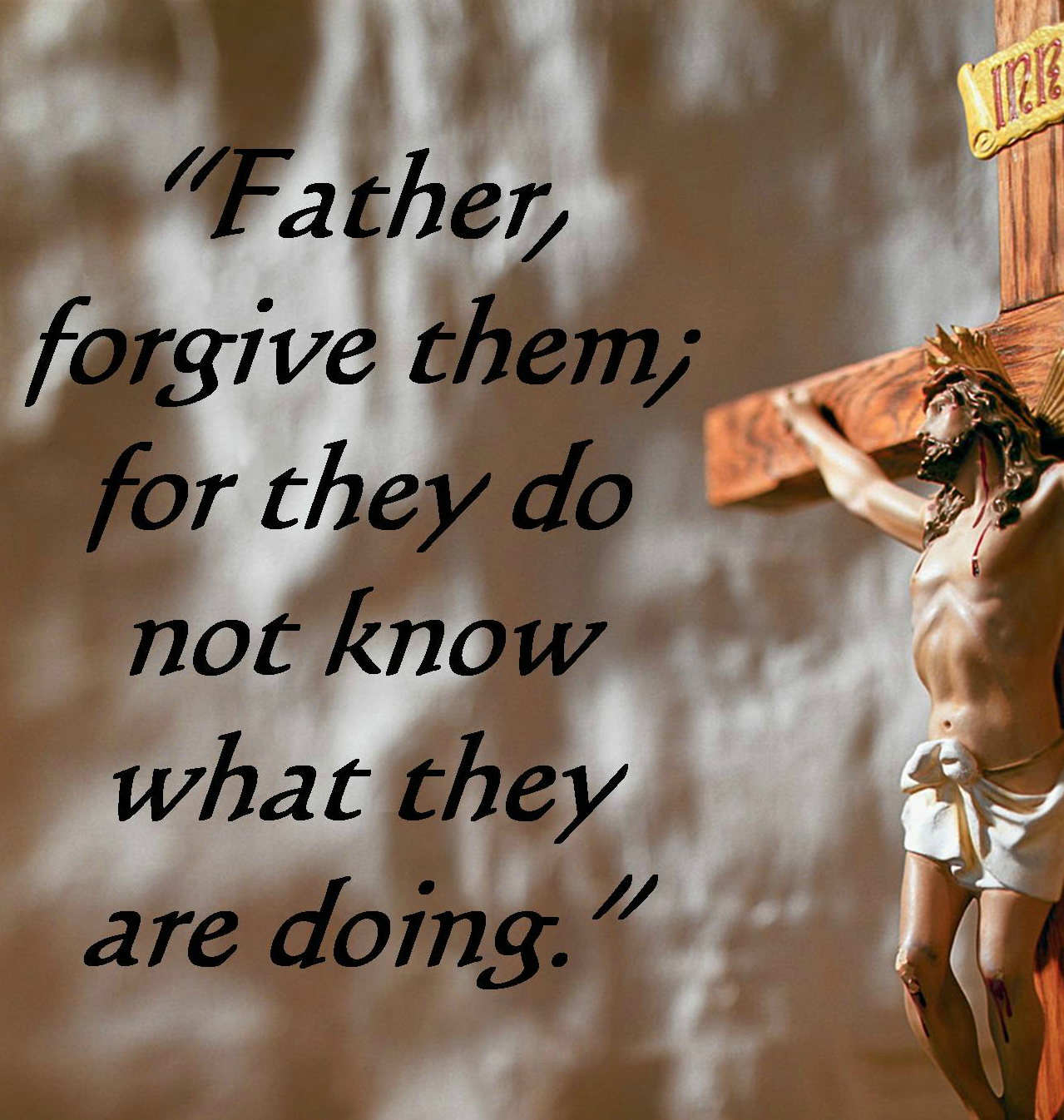
Forgiving is not weakness – it is courageous

Posted by: Fr Chris | July 29, 2023

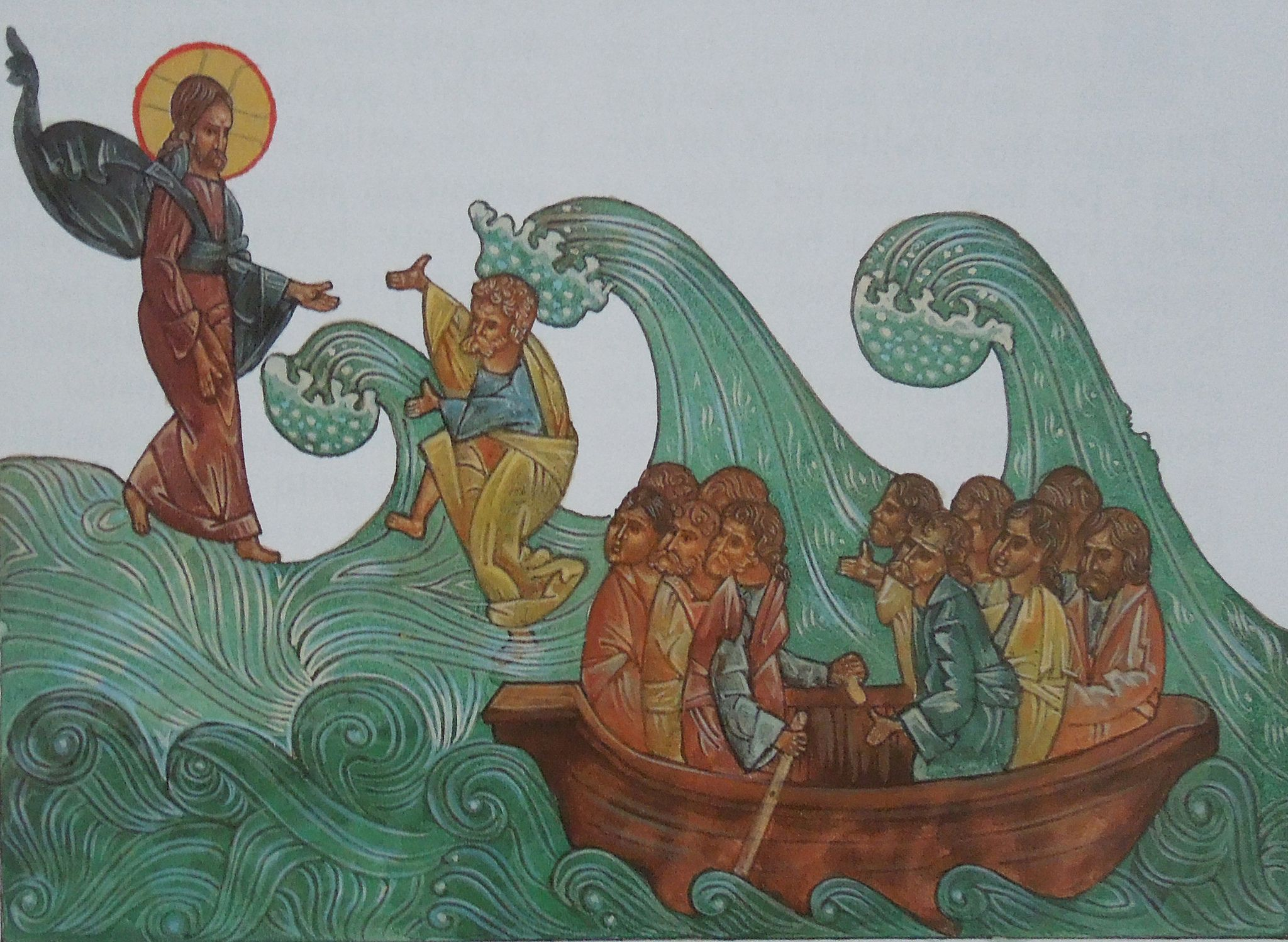
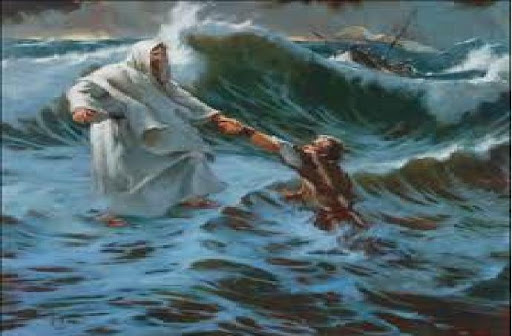
Peter sinks … and is saved

9th Sunday, 1 Corinthians 3: 9-17 and Matthew 14:22-34

This event happens right after Jesus has fed the thousands of people in the wilderness. The disciples are sailing to Gennesaret but Jesus wants to go and pray alone. The Sea of Galilee is nearly four and a half miles wide. Saint Mark says of this that they were “in the middle of the sea,” so they are far from land, and Matthew tells us that it was during the fourth watch of the night: i.e., between 3 a.m. and 6 a.m. So, these experienced fishermen have spent most of the night stuck in a windstorm, trying to cross the sea and failing to do so.

Per usual, Peter is the impulsive one in the boat, the boat that to this day is used as a symbol of the Church, and is the only one brave enough to call out to this apparition and then to walk on the waters. Christ’s answer to all of them when they are panicking, Ego eimi is important: It is I is better rendered as I AM  or HE WHO IS. He uses the name of God from Exodus chapter 3, verse 14 where God says to Moses “I AM WHO AM. This is what you are to say to the Israelites: ‘I am has sent me to you.” These are the words that are so often inscribed in the halo around Jesus’ head in three Greek letters in icons, Ὁ ὬΝ emphasizing to us that He is the Son of God, the second Person of the Trinity, the Eternal Word, the Logos of God. He is declaring to them His full divinity, an outrageous statement, except here He is, walking atop the waves of a very stormy sea, out in the very middle of it all, walking to them far from the shore.

For Matthew, and for the apostles that scary night, the image that came to all of them was this, from Psalm 107, and this is why when Peter and Jesus get into the boat, they worship Jesus.

The psalm reads like this:    Some went down to the sea in ships, doing business on the great waters; they saw the deeds of the Lord, his wondrous works in the deep,  For he commanded, and raised the stormy wind, which lifted up the waves  of the sea./  They mounted up to heaven, they went down to the depths;  their courage melted away in their evil plight / they reeled and staggered like drunken men, and were at their wits’ end.  Then they cried to the Lord in their trouble, and he delivered them from their distress;  he made the storm be still, and the waves of the sea were hushed.

Then they were glad because they had quiet, and he brought them to their desired haven.  Let them thank the Lord for his steadfast love, for his wonderful works  to the sons of men!

So two things to consider here:

  1. Peter, James, John, and Andrew were all fishermen, who had been through many a storm. But they were just as scared and worn out as the other apostles, and they knew that no one could walk on water in the middle of the Sea of Galilee. All of the apostles would know that psalm, and that moment when Jesus puts Peter into the boat and comes over the side is the moment when they kneel down to worship Jesus as God they are fulfilling those words: Then they were glad because they had quiet, and he brought them to their desired haven.  Let them thank the Lord for his steadfast love, for his wonderful works  to the sons of men! They knew that Jesus really was I AM WHO AM.
  2. Peter was fine on the stormy waves until he looked around and realized fully what he had done. He could walk on the waves toward Jesus, he could step atop the water exactly as Jesus was doing, he was in the same state as Jesus, as long as he looked only at Jesus. Look around at the messy world and get caught up in the sins and brokenness of our stormy world, and we will most definitely fall down and risk drowning spiritually.

Saint Paul writes in the epistle from First Corinthians, chapter 3,  today that No one can lay any foundation other than the one already laid, which is Jesus Christ. And in verse 17 Don’t you know that you yourselves are God’s temple and that God’s Spirit dwells in your midst?

As long as we keep Jesus Christ and His teachings as our foundation, all is well. As long as we remember that the Holy Spirit literally is living in us and among us, all is well. If I am rooted in solid Catholic teaching, by reading Scripture; by studying good theology; by participating in the programs offered in our parish, in the local parishes, on the internet; by being people who pray and turn to God regularly, every day, throughout the day – then all is well. Like Peter walking on the waves, we will be fine, no matter how crazy the world gets, no matter what sins I think about committing, no matter how foolishly I am tempted to act.

Remember that even though the apostles worship Jesus at this moment in the boat, even though they all recognized that indeed He was the living incarnation of God, of the one who said I AM WHO AM on Mount Sinai, when the Passion took place all fled. Only the youngest, the teenager John, only he would stay by the side of the Incarnate God Who willingly shed blood for us, who willingly endured the humiliation and thirst, Who willingly died for us. So just as our faith can be shaken, so was theirs. Just as we can abandon our foundational faith sometimes, so did they. But after the resurrection, Jesus did not rebuke them or punish them. Instead He breathed on them and poured out His spirit on them. And suddenly, once again, all was well.

These are readings that should give us tremendous comfort in hard, challenging, scary moments of sin, or fear, or just plain old spiritual exhaustion. Christ waits for us, extends his hand to us. He is always ready to give us His pierced hand, pierced on the cross for love of us, to save us from Satan’s power and to bring us closer to His heart and into the embrace of the Father through the power of the Holy Spirit. Let us truly rejoice in that reality in this Liturgy today, and give thanks to the Lord of Lords for loving us so much. Let us ask Him for the grace to show that love to our stumbling world that is filled with so many storms, and to go forward in the power of the Spirit, to give that world its true safe harbor in Christ’s Church.

Posted by: Fr Chris | July 20, 2023

July 20 Elijah the Great Prophet

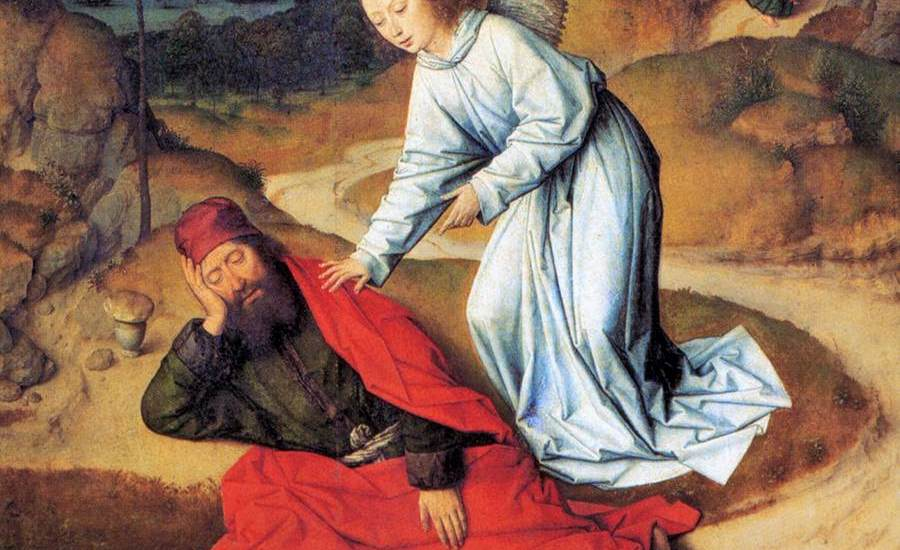
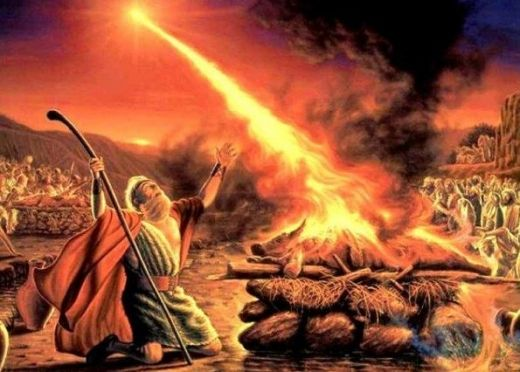
After God shows his power and the destruction of the prophets of Baal on Mount Carmel (1 Kings 18), the wicked queen Jezebel set out to destroy Elijah. The once mighty prophet runs for cover-seeking refuge in a desert under a broom tree, begging God to take his life. There an angel comes to him, and gives him bread from heaven, bread that foreshadows the Eucharist. The angel brings him this unique bread, the bread that foreshadows what Jesus will bring to us, the bread worshipped by the angels at every altar in every Catholic rite around the world, the bread that is the summit of our lives, the heart of our existence.

With this bread, Elijah travels to Horeb, that is to Mount Sinai. He goes to where Moses met God, where ancient Israel once worshipped an idol made of gold, and where God revealed Himself in His full power and majesty amid thunder and lightning, and gave the commandments to Moses and to the people of Israel. Elijah saw the people reject those commandments and are worshipping idols and false gods again. But how does God reveal himself to Elijah, the greatest of all of the prophets?

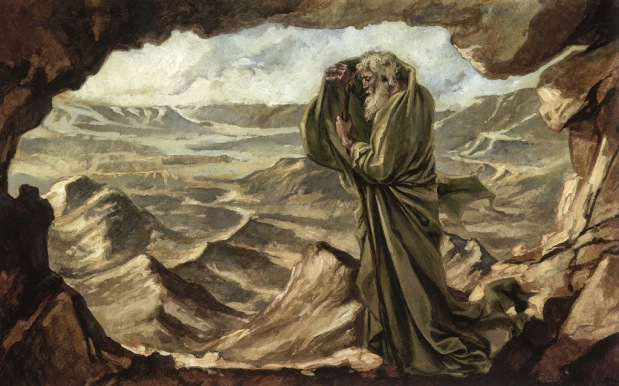
“Then the LORD said, “Go outside and stand on the mountain before the LORD; the LORD will be passing by.” A strong and heavy wind was rending the mountains and crushing rocks before the LORD–but the LORD was not in the wind. After the wind there was an earthquake–but the LORD was not in the earthquake. After the earthquake there was fire–but the LORD was not in the fire. After the fire there was a tiny whispering sound. When he heard this, Elijah hid his face in his cloak and went and stood at the entrance of the cave. A voice said to him, “Elijah, why are you here?” (1 Kings 19:11 – 13)

Not in thunder, or earthquakes, or fire – but after all those dramatic moments, Elijah hears the thin small sound of silence, and then he goes to the mouth of the cave and covers his face and his head, because he knows that God is there.

Why are we here? Not just here, tonight, in this church. Why are we here?
We are here to learn, to grow, to love, to grow in love and truly learn how to love God and be loved by God. The Eucharist is our principal food, our main food, the food that carries us. That heavenly bread, the bread of the angel, that first panis angelicus, carried Elijah for 40 days to Sinai, to meet the Lord God face to face.

Holy Communion, the true angelic bread, the true panis angelicus, brings us face to face with God here and now.

Why are you here?

He was there to learn, and after all of the spectacular things recorded in the first book of Kings – of calling in drought, of destroying the false prophets of the false god, of raising the dead back to life, of ending the drought with the torrential rains that poured out of a single little cloud, escaping Jezebel’s plan to kill him, of feeding off the bread from an angel – after all that, he finds God in the thin small sound of silence, of a tiny whisper of a sound. Elijah hears God, because he surrendered and let go.

There is a mystery here, deep and profound, as simple as a whisper. God is searching for men and women who will surrender their lives in love to Him. Often, it takes the depletion of all of our own efforts and resources before we are willing to give up – and give in – to Him.

In this liturgy tonight, let us ask the Lord when we receive Him in Holy Communion that like Elijah, we will surrender ourselves to Him. Let us strive to listen to Him, to hear Him. In all of the spectacular miracles that Elijah performed, he never once covered his head and face, in all of the times that he proclaimed what the Holy Spirit revealed to him, he never covered his head and face. He only does that in the thin small sound of silence at the mouth of the cave because he has learned to truly listen.

The apostles asked Jesus when had Elijah returned, and he tells them that it was through the mission of John the Baptist, that fulfilled what the angel Gabriel had announced to Zechariah. The angel had said then in Luke chapter 1  that John will turn many of the children of Israel to the Lord their God. He will also go before Him [Jesus] in the spirit and power of Elijah, ‘to turn the hearts of the fathers to the children’ and the disobedient to the wisdom of the just, to make ready a people prepared for the Lord”.

Am I prepared for the Lord, or am I overly attached still to certain things of this fallen world? Am I obedient in the wisdom of the just, or am I attached to the disobedience of sin? Elijah made mistakes, got scared, ran away. But in the end, he surrendered his own will to the will of God, and then he could meet  God. Let us try especially hard tonight to meet God when we receive the panis angelicus, the bread of angels, in this Eucharist, and may Saint Elijah the prophet to pray for us all to do just that.

Posted by: Fr Chris | June 30, 2023

SS Peter and Paul: pray for us and inspire us!

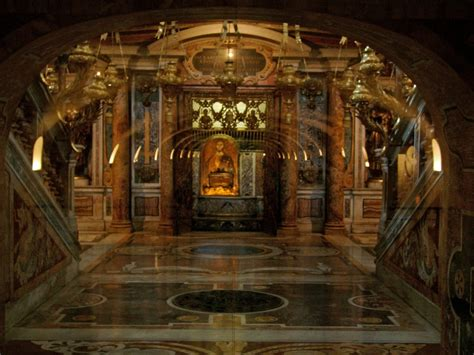
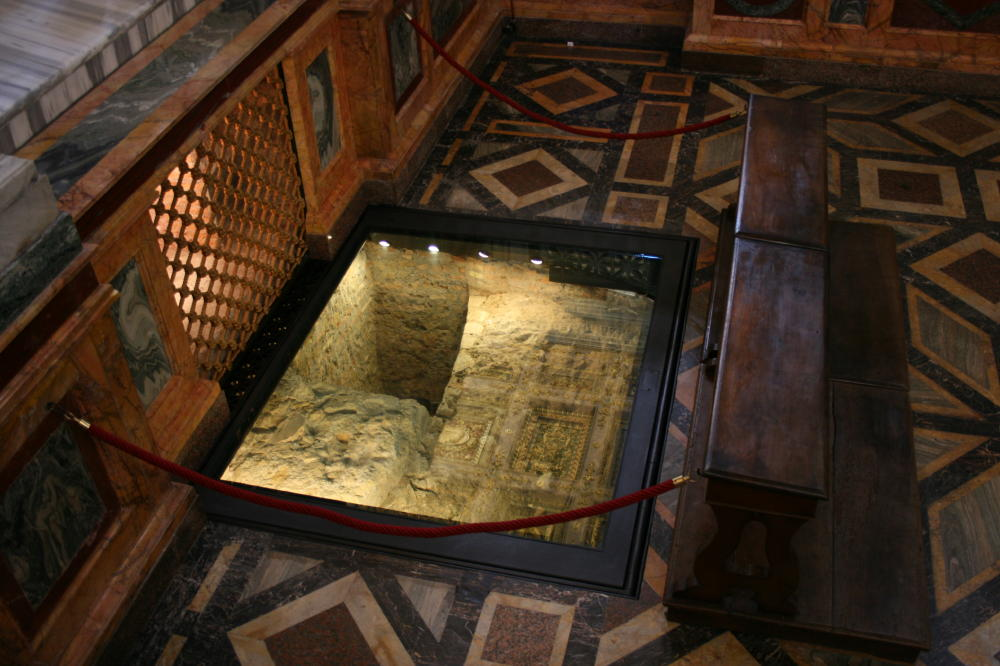
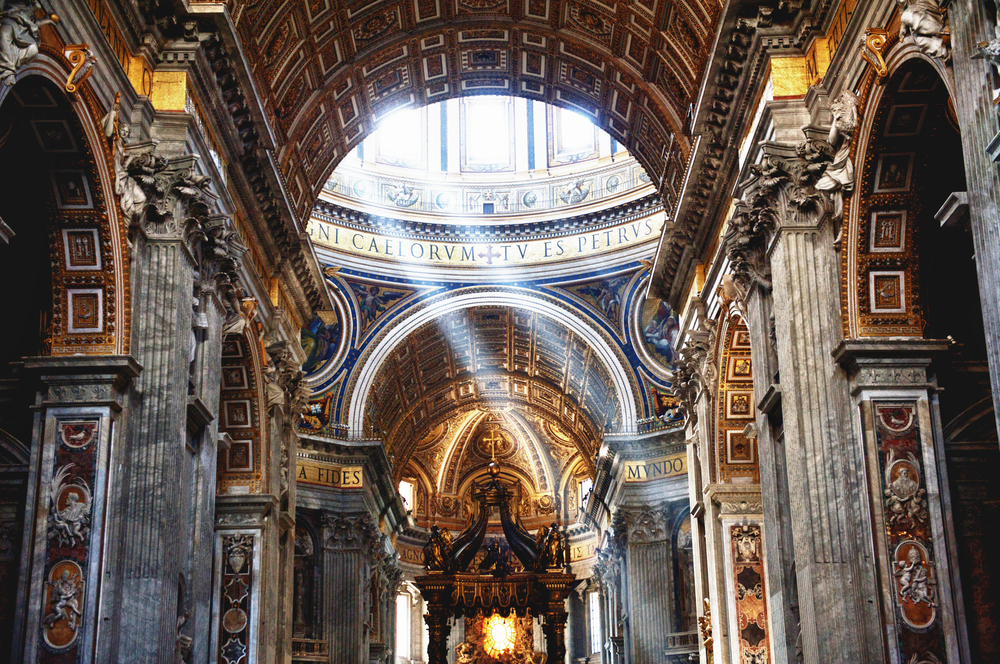
These two pillars of the Church were killed on this day in the year 67, during the first persecution of Christians ordered by a roman emperor. Nero was being blamed for the destruction of two-thirds of the imperial capital of Rome in a massive nine-day fire in the year 64, and he shifted the blame to the new Christian Church. Peter was crucified upside down, and buried on the Vatican Hill, which was a large cemetery outside of the city. Saint Peter’s basilica is not only built over his grave, but the high altar is in a direct line with his tomb. Paul was a Roman citizen, so he was beheaded, and he is buried in the altar of the basilica of Saint Paul’s, outside the city walls.

Confessio leading to tomb of St Peter in Rome

Paul was erudite, well-educated, born as a Roman citizen, conversant in multiple languages, able to debate with the Greek philosophers in Athens. Peter was a middle-class fisherman, impulsive, emotional, probably older than Paul. Peter had walked with the Lord throughout his public ministry, Paul was brought into the service of the gospel by Jesus Himself during the famous apparition on the road to Damascus.

Tomb of Saint Paul in Basilica in Rome

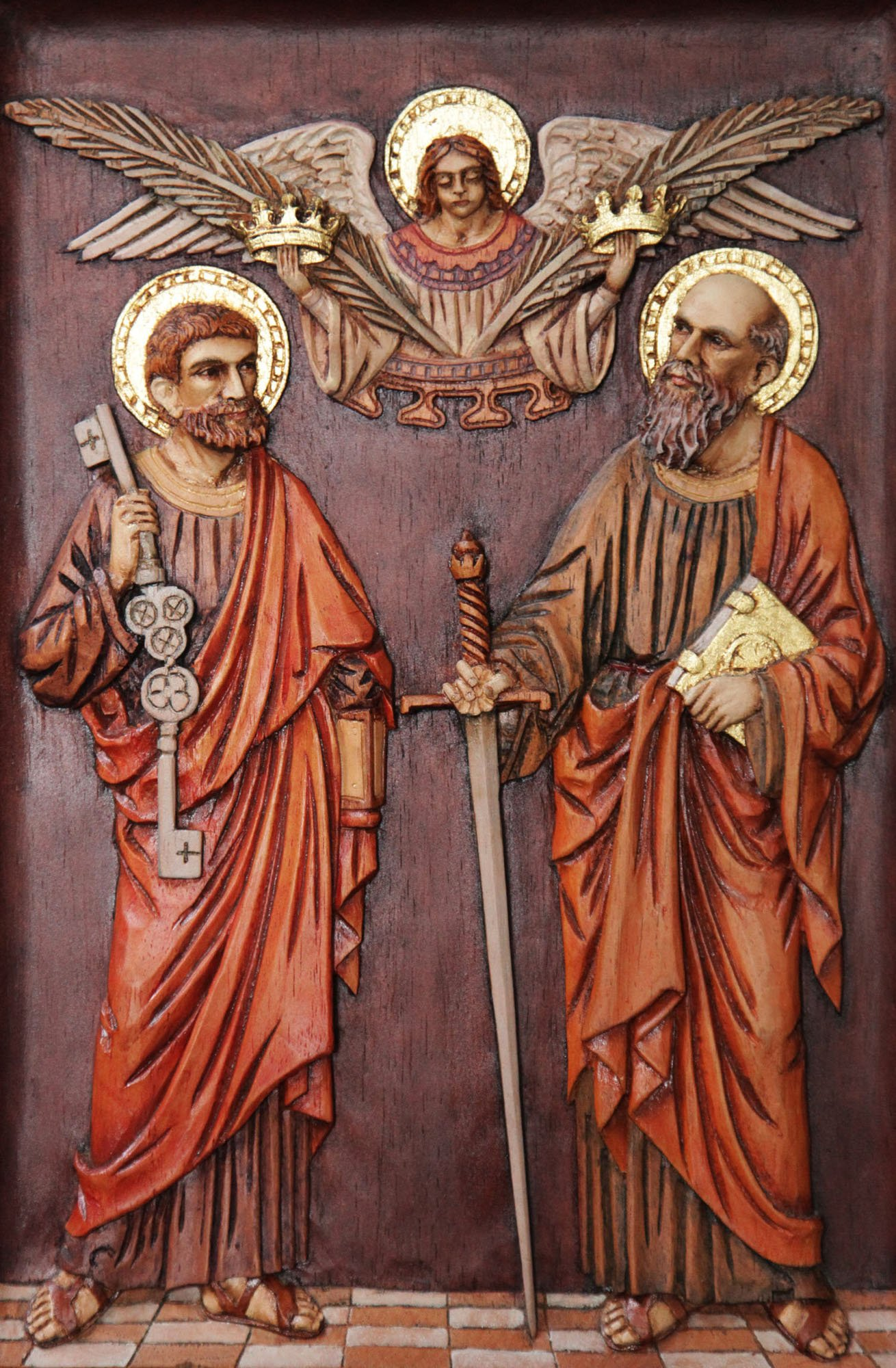
The two great Apostles

When they are shown together, Peter has the keys, given to him by Jesus as a sign of his stewardship over the Church on earth and Paul with a sword, but both hold books that represent their epistles. Paul’s theology is key to the Christian faith, Peter’s role as leader and guide literally provided a solid foundation for the early Church to build upon.

What are the names of popes who were heretics?

None.

There were heretical patriarchs in Constantinople, Alexandria, and Antioch, but never in Rome.

Pope Liberius condemned Saint Athanasius after he had been jailed and tortured, but he refused to sign a heretical statement of faith. Pope Honorius failed to condemn the Monothelite heresy because he did not grasp the Greek grammar involved, The gift of the Holy Spirit has protected the Catholic Church throughout its history, a history that is unbroken and rooted in Jesus, not in Peter or any other man.

Christ’s promise to Peter and the apostles has remained intact ever since that dramatic day when he promised that the gates of hell would not prevail against the  Church built on the rock of Peter. We have had corrupt popes, weak popes, popes who failed at their job, but never a heretical one.

The Church has been entrusted to Peter’s care – that is the symbolism of the keys. Peter and all those who have followed Peter in the seat of Peter have lived out their responsibility as Jesus’ vicars, his stewards responsible for the kingdom, for the proclamation of the Good News to the nations of the world.

Paul’s theology remains critical to prayer, spiritual writing, church structures, and how we interact with one another. And both were so profoundly affected by Jesus and their encounters with Him, so transformed, that they were willing to die on His behalf. May we have the courage to stand firm in the Catholic faith, and to go forward in faith. Let us ask Saints Peter and Paul to imitate them in their fidelity to Christ! Their faith and fidelity inspired the first Martyrs of the Church of Rome, who suffered so grievously under Nero. May we be as strong in faith as they all were.

Posted by: Fr Chris | June 24, 2023

Curing the Centurion’s Servant

Leaving Nazareth, Jesus went and lived in Capernaum, which was by the lake in the area of Zebulun and Naphtali— and in doing so, He fulfilled what was said through the prophet Isaiah:

15 “Land of Zebulun and land of Naphtali, the Way of the Sea, beyond the Jordan,     Galilee of the Gentiles— 16 the people living in darkness  have seen a great light; on those living in the land of the shadow of death  a light has dawned.”

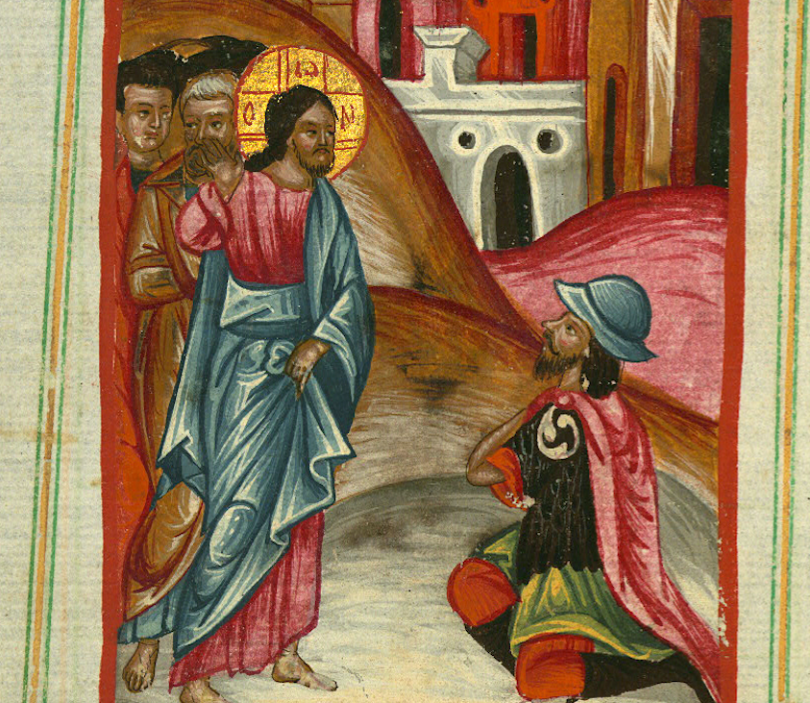
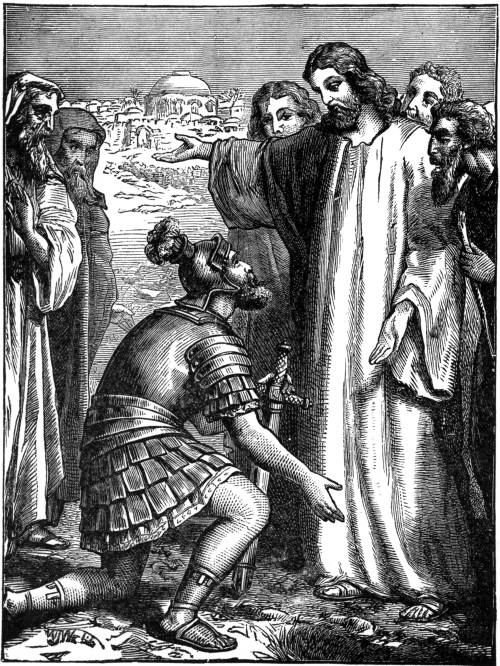
Jesus made Capernaum his base, a city of Jews and pagans, in Galilee, a territory that the Pharisees and Sadducees mocked as being ignorant and damned because of the presence of so many Gentiles. This is where the Son of God chose to live, alongside the families of Peter and Andrew, James and John, and seven other apostles. Now here we have the ultimate representative of the Galilean pagans approach the Lord, a Roman centurion, an officer in command of 100 soldiers of the hated empire. This unique event in the gospels has the pagan soldier come forward with great faith, asking that his servant be cured. Jesus’ response is in verse 7: “I will come and heal him.”

The statement is made by the centurion that he is not worthy for Jesus to come under his roof, but only say the word and the servant will be healed, a sentence so profound that it was incorporated into the Roman rite Mass, modified slightly to my soul shall be healed. It is not only that the centurion knows a rabbi would get into a lot of trouble for coming into a Roman house; he also realizes that despite his own exalted status in Capernaum, he is inferior to Jesus. He knew that he was in the presence of someone who was much more than a prophet, because he has full confidence in what this Jewish man can do – achieve a cure simply by stating it.

Jesus first praised his faith, and then predicted that Gentiles would take the place of many Jews in the kingdom. The praise is: “I have not found anyone in Israel with such great faith.” In His travels in the land, in His public ministry, Jesus saw every kind of response. But this one was the greatest demonstration of faith He had seen, greater than any Israelite’s faith so far.

Jesus experienced people who walked away from him when his sayings were too challenging, like in John 6. He experienced his own apostles being weak in faith during as simple a thing as a storm, let alone what would happen in the garden of Gethsemane. This soldier, this foreign officer, has faith far beyond that of so many of the Jewish followers. In Luke’s gospel the local Jewish elders intercede on behalf of the centurion, saying that he helped to build the synagogue and was kind to the Jews. But that’s not what convinces Christ to heal the servant. It is the man’s faith.

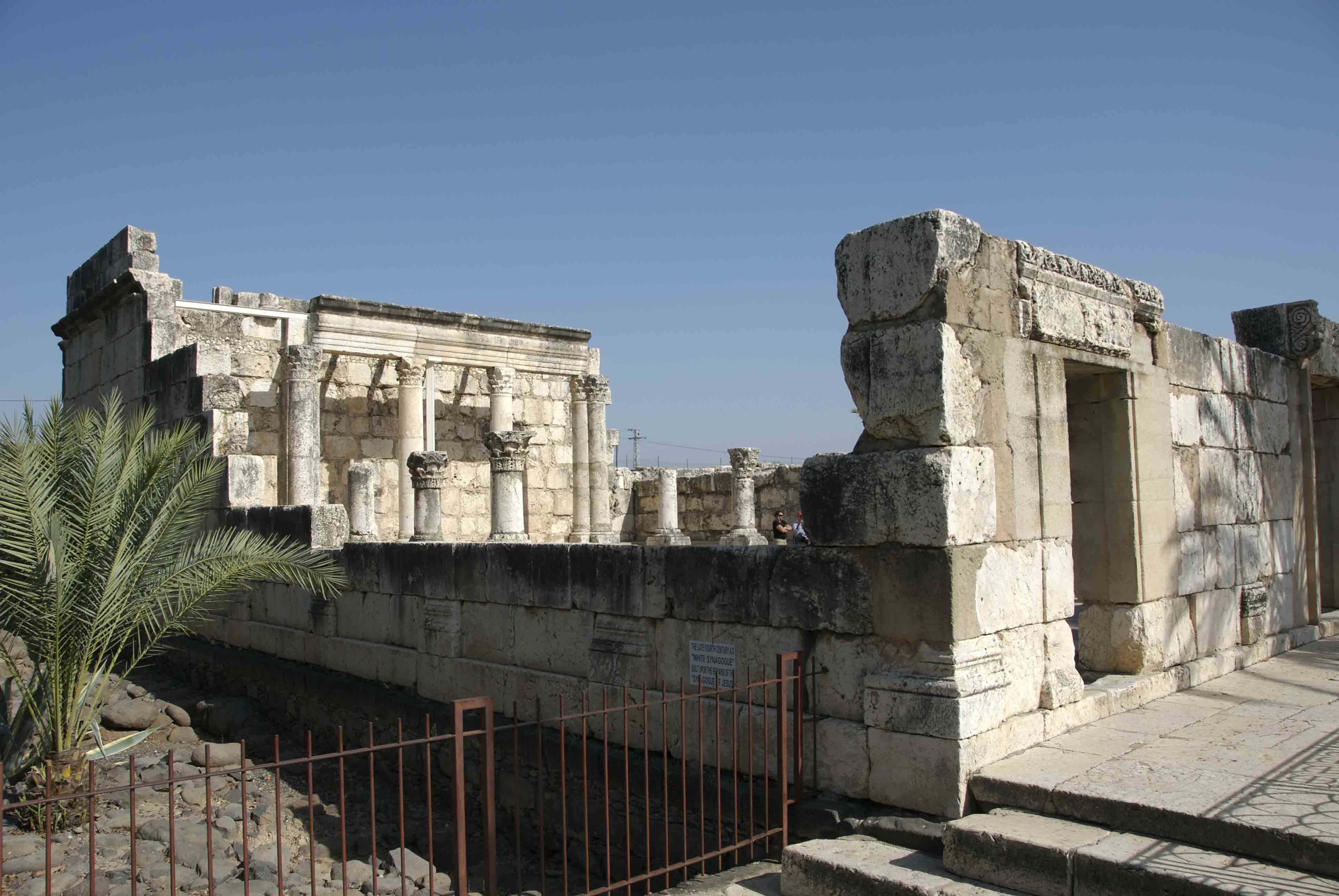
Ruins of the synagogue at Capernaum

Jesus has an interesting quote regarding Capernaum and the towns around it in both Matthew and Luke –  And you, Capernaum, will you be lifted to the heavens? No, you will go down to Hades. For if the miracles that were performed in you had been performed in Sodom, it would have remained to this day.  But I tell you that it will be more bearable for Sodom on the day of judgment than for you.” His lament is based on the fact that so many of the Galilean and Judean Jews would not accept him, would not listen to him. But here is a pagan Roman who comes forward. He is the only person in the four gospels looking for a miracle who does not ask Jesus to come to his house, or to touch the sick person, or who tries to bring the sick person near Jesus. He has complete trust and confidence that Jesus has the power and authority, given by God, to perform the cure at a distance, even a great distance. He has more faith in the power of Jesus to effect a cure than any Jew in the gospels does. He, a powerful Roman official, humbly accepted the fact that Jesus had authority. The majority of Jews did not accept that Jesus had authority over life and death, that He came in the full power of God. But this man did.

Matthew makes this the occasion for a stern warning to Jews, whose birth as Abraham’s posterity makes them “sons and daughters of the kingdom” (v. 12) but who nonetheless forfeit their birthright by refusing to accept Jesus as the Lord’s Anointed. The same holds true for Christians now – we cannot presume that we are saved just because we are baptized, or in the Catholic Church, or because our parents were believers. Christians must not simply address Jesus as “Lord” but humbly acknowledge his right to rule their lives day by day.

As sons and daughters of the kingdom, we cannot claim a birthright for granted. The Church today grows in Africa and Asia, but is declining in North America and Europe. People are entering the Church from different directions, while those born into the privilege of faith nurtured by generations of ancestors going back over a thousand years casually throw it away.

In 1969 a young German priest was interviewed on Radio Deutsche Welle, and he made this prediction: From the crisis of today the Church of tomorrow will emerge — a Church that has lost much. She will become small and will have to start afresh more or less from the beginning. As the number of her adherents diminishes, so it will lose many of her social privileges. In contrast to an earlier age, it will be seen much more as a voluntary society, entered only by free decision. As a small society, it will make much bigger demands on the initiative of her individual members. But in all of the changes at which one might guess, the Church will find her essence afresh and with full conviction in that which was always at her center: faith in the triune God, in Jesus Christ, the Son of God made man, in the presence of the Spirit until the end of the world. In faith and prayer she will again recognize the sacraments as the worship of God and not as a subject for liturgical scholarship.

That priest was Josef Ratzinger who became Pope Benedict XVI. We form part of that smaller Church in this small parish. You are here today because of faith, faith that hopefully is like that of the centurion. Some of you may very well throw away this treasure despite growing up in this parish and in this tradition. Hopefully most of you will hold onto this faith, this gift, and grow in it like the centurion did. That soldier had full confidence that what Christ said was true, a confidence that we can have: that Christ was God, that the sacraments are true, that the Church he founded on the rock of Saint Peter still exists today. May we turn to Him today, tomorrow, and every day, with the faith and conviction of the centurion, and may we be brave enough to bring others with us before the throne of the Son of God at the end of our lives. Christ is among us.
Posted by: Fr Chris | June 23, 2023

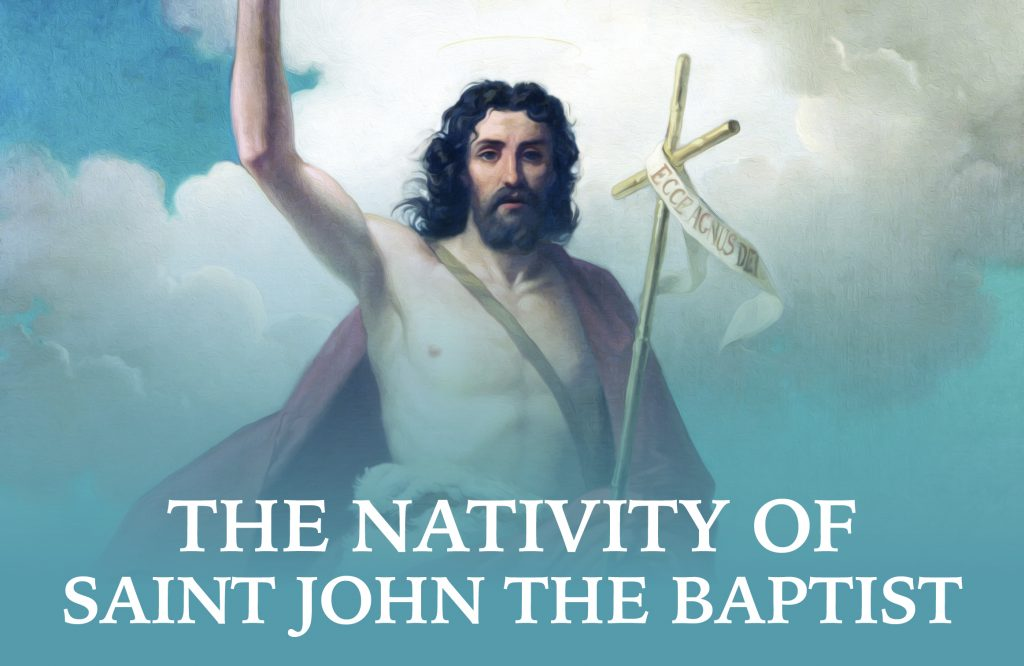
Nativity of St. John the Baptist

There are two particular Old Testament passages that reflect the ministry of Saint John the Baptist. One is from Malachi 3: 1

Behold, I send My messenger, And he will prepare the way before Me.

The second is from Isaiah 40:

 The voice of one crying in the wilderness:

“Prepare the way of the Lord; Make straight in the desert A highway for our God.

Every valley shall be exalted And every mountain and hill brought low;

The crooked places shall be made straight And the rough places smooth;

The glory of the Lord shall be revealed, And all flesh shall see it together;

For the mouth of the Lord has spoken.”

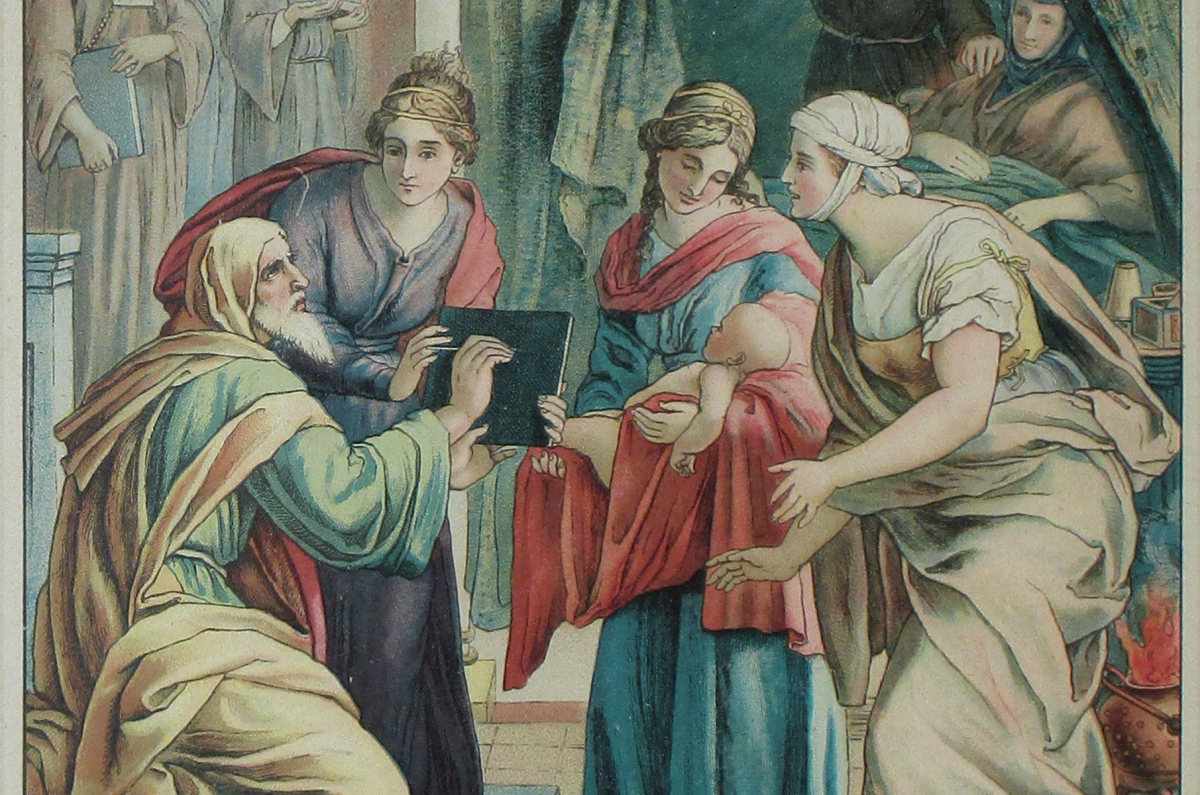
Both Scriptures make reference to the fact that before the coming of the Christ, God will send a messenger to prepare the way. John is the messenger. But he is more than that –  We see it laid out for us in what Zechariah has to say, who goes from being struck mute and apparently also deaf, to proclaiming the glory of God in his new baby son in the famous Benedictus that we still say daily in the divine office. Only after he acknowledges that the baby will indeed be called John, which means Graced by God, only then can he fulfill his role of being a prophet and foretell the future ministry of John.

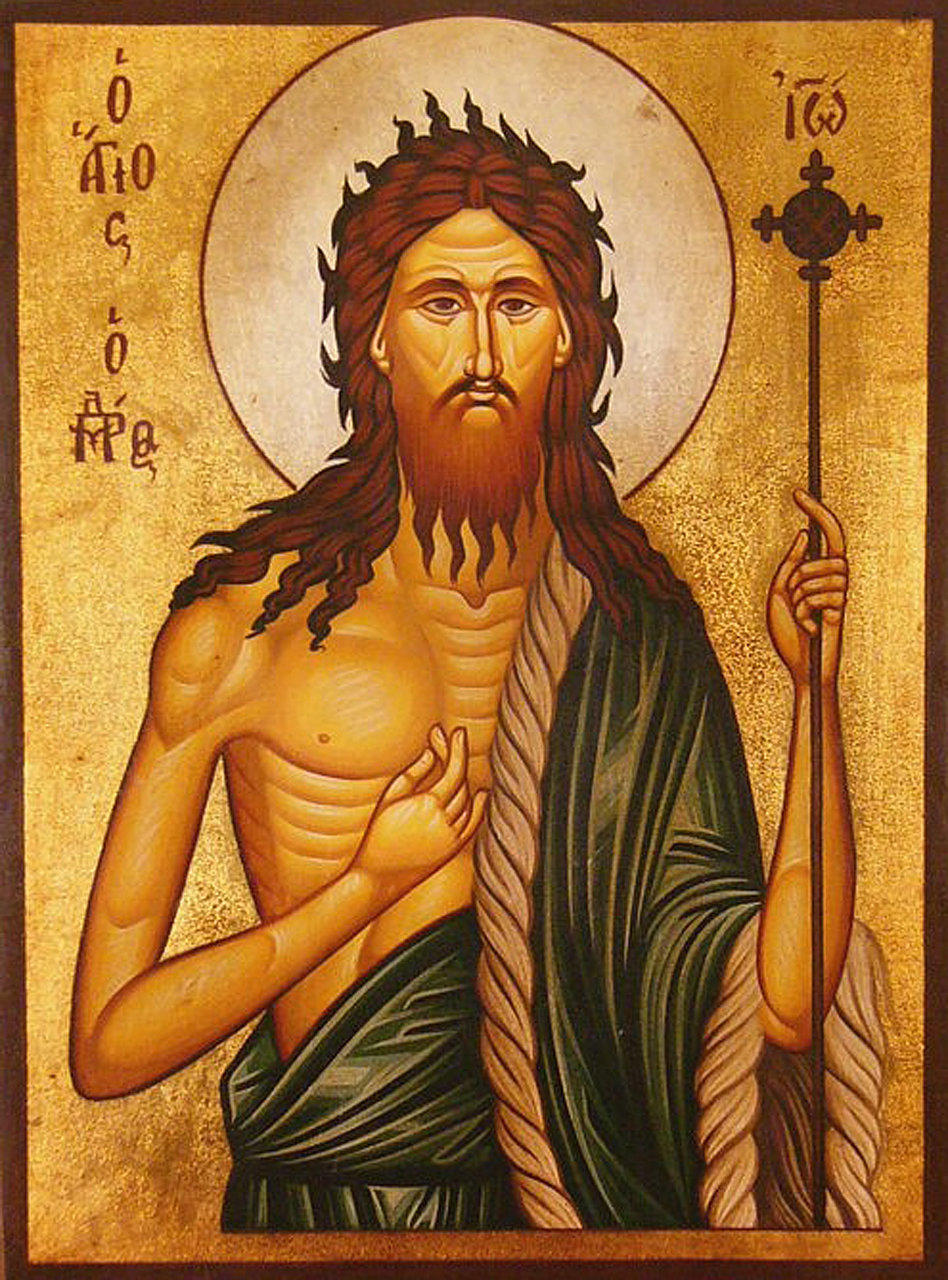
John did not set up a new sect within Judaism, but rather, after he grew up, he left the hill country of Judea, the territory of the most devout Jews, the land of Jerusalem itself, and he went out into the desert. Jesus will do the same thing, and then Jesus would emerge from the desert to settle in Capernaum, the territory of Galilee. John’s time in the desert though, is different. He emerges from the wilderness, the land of wild animals but also the land where prophets would go to encounter God, and he would come into Israel 500 years after the last of those prophets and set the countryside on fire with his preaching. As the prophet of God, the last of the prophets, he truly came to pave the way for the Messiah. The desert then was home to the Essene Jews, who founded isolated monastic communities; it was home to Zealot rebels, who would follow different false Messiahs and launch violent rebellions. John doesn’t do either of these – he will call the people to radical conversion, and administer a ritual baptism of repentance and sorrow for one’s sins. This conversion is a conversion to prepare the people for the Lord, not just a ritual. John won’t get caught up in multiple ceremonies like the Essenes did, he won’t be emphasizing animal sacrifices like the priests, or fulfilling the 631 commandments of the law like the Pharisees.

John’s call is to prepare hearts, to make people listen to the essence of the Law – God is alive, God has not forgotten the Jews, God is sending fire upon the earth through His Holy Spirit, and that fire will be given by Christ.

This feast falls at mid-summer, just when the days begin to shorten. There are two reasons for this: firstly and mostly directly, it is clear from the Gospels that St John was born six months before the Savior (Luke 1:26), and so his Nativity falls six months before that of the Savior; secondly, the Nativity of the Savior was appointed at a time when the days begin to lengthen as a sign that He is the Light of the world, the Baptist’s Nativity is kept as the days shorten as a reminder of his own words: “He must increase, but I must decrease.” He comes to do God’s will, to move hearts, to make people think.

The same is true for any Catholic Christian today. We are entrusted with the gospel message of Jesus, with the fullness of revelation given to His Church. The great saints did not achieve holiness by accumulating power or fame – they did their job, they grew in the power of the Holy Spirit through conversion, and they stepped aside to let God work in their own hearts and the hearts of people around them.

When Saint Therese of Lisieux died, some of the nuns in her monastery said, What will we write about her? She died so young and never did anything. Then they read her magnificent journal, what we call The Story of A Soul, and their hearts were set on fire. Saint Anthony of Padua worked in the kitchen, happily scrubbing the pots, until he was asked to give a sermon on a feast day with no time to prepare, and everyone in the church was transformed by the power of his words. Saint Basil the Great was so close to God that Saint Ephrem said he saw the Holy Spirit speaking in his ear while he preached.

All of the saints and blesseds did what God asked of them, wrote what they were inspired to write, and stepped aside to let the Spirit go to work. The same is true for us – while we work at living out our salvation in fear and trembling as Saint Paul says, we have to do what we are each called to do in our particular state of life, and do it well, for the glory of God, and do it so that others will feel God’s love. We study well, we play the sport well, we love our spouse and our children and our parents, we do our work as a civilian or a soldier or a priest or nun and do it well, for the glory of God and out of love for God.

John comes into the world and in the very womb of his mother worshipped Jesus at the moment of the Visitation, when Mary met Saint Elizabeth, and spent his entire life worshipping and serving God. We can do the same, out of true love of God, if we listen to the Spirit and respond to the Spirit. Let us ask him for this grace, the grace to listen to the Lord and to be converted by that Holy Spirit, to go forward in love and mercy and in God’s power, not my power.

« Newer Posts - Older Posts »

Categories