Sorry to have been absent – I have had some serious flare-ups of neural pain and inflammation, which have kept me away from writing. Here is what I submitted to our parish for Saint Patrick’s Day –
March 17 is the feast of Saint Patrick. In the Byzantine Typikon, he is honored as the “Enlightener of Ireland.”
Patrick lived from about 387 to about 417, and he is the most famous of the Romano-British missionary saints. After being enslaved at 16 years of age by Irish raiders, he escaped after six years and was reunited with his family. But he went on to study for the priesthood in order to fulfill the dreams God sent him of saving Irish souls. Consecrated as Bishop of Ireland by Pope Celestine I around 431 AD, he returned to serve the small Christian population and to preach to the pagans. He spent 30 years preaching, ordaining priests, establishing dioceses with bishops, and teaching missionaries. Icons depict him in green vestments, the traditional color of Ireland, holding the three-leaf shamrock. Irish legend has it that Patrick and his missionaries used the shamrock to teach the people about the Three Persons of the Trinity in the One God.
While the shamrock story may be a legend, it is a fact that he established the beautiful Celtic crosses. The story of Patrick driving out the snakes is a metaphor for driving out pagan worship and rooting the Church deep into Irish culture.
Saint Patrick’s Mountain, Croagh Patrick. A striking cone-shaped mountain in County Mayo, this was a holy place under the druids of the old Celtic pagan religions. Patrick came here often to pray, and once he was inspired by his guardian angel to imitate Moses and spend forty days and nights, in intense intercessory prayer for the Irish people. He had only a slight recess in the rocks as his shelter at night, and otherwise spent the time praying exposed to wind and rain, interceding for the Irish of his day and the generations to come.
Pilgrims on Croagh Patrick – the tradition is to walk barefoot for penance
As the Catholic Encyclopedia relates:
The whole purpose of hisprayerwas to obtain special blessingsand mercy for theIrishrace, which he evangelized. Thedemonsthat madeIrelandtheir battlefield mustered all their strength totemptthesaintand disturb him in his solitude, and turn him away, if possible, from his pious purpose. They gathered around the hill in theformof vast flocks of hideous birds of prey. So dense were their ranks that they seemed to cover the whole mountain, like a cloud, and they so filled the air that Patrick couldsee neither sky nor earth nor ocean. St. Patrick besoughtGodto scatter thedemons, but for atimeit would seem as if hisprayersand tears were in vain. At length he rang his sweet-soundingbell,symbolof his preaching of the Divinetruths. Its sound was heard all over the valleys and hills ofErin, everywhere bringing peace andjoy. The flocks of demonsbegan to scatter. He flung hisbellamong them; they took to precipitate flight, and cast themselves into the ocean. So complete was thesaint’svictory over them that, as the ancient narrative adds, “for seven years noevilthing was to be found inIreland.”
Pilgrims still climb the mount, especially on the last Sunday of July, when thousands of pilgrims will gather to climb to the summit and see where Patrick prayed. It was traditional to go barefoot over the sharp and rough scree rocks, and many men would go shirtless exposed to the harsh winds; these practices were to atone both for their own sins and the sins of others. Now the Irish police try to convince people to be more modern in their penances, and thus safer, but some still follow the old ways.
In 2010, a huge crowd of 20,000 climbed Croagh Patrick. Given the shock over the sexual abuse scandals in Ireland, people felt that there was much to pray for.
I will be presenting a retreat night at 6:30 PM on Jesus’ Passion at 6:30 PM Mountain Time. Go to YouTube and then to OLPH Media. This will include both explanations of what happens in the Four Gospels, and applying it to ourselves. This will be recorded for future viewing as well.
Previously, Churches using the Byzantine rite celebrated St. Polycarp of Smyrna, who was ordained bishop by St. John the Evangelist, on the second Sunday of Lent. That commemoration has been replaced by that of St. Gregory Palamas, the famous defender of hesychasm in the 14th century. Replacing such an ancient commemoration as that of Polycarp gives us an idea of just how important the hesychast controversy was.
The monks of Mount Athos had been condemned by the monk Barlaam, an Italo-Greek monk from Calabria in Italy, who favored education over contemplation, and who emphasized that God is unknowable in this life. The monks taught hesychasm, using the Jesus Prayer and certain body postures or breathing, so as to draw very close to God, and for some, to see the Divine Light in this lifetime. In this, they were following the practices of the Desert Fathers of old. The Jesus Prayer is one of the most ancient in the Church: Lord Jesus Christ, Son of God, have mercy on me, a sinner. The monks recommended certain breathing techniques, or positions of the body, while reciting the Prayer. This rigid use of the body postures was repeatedly – and rightly – condemned by many saints and writers as people could end making the physical position and breathing more important than the Prayer.
Gregory himself emphasized that such physical practices had to be done only with the guidance of a true spiritual elder. The Jesus Prayer, so central in our spirituality, when used well, has a profound effect so that:
he who is in prayer experiences the fullness of the divine presence, of Life Itself, of Life abundant and unfathomable, then his own life strikes him as a tiny drop in comparison to the boundless ocean. That is what the righteous and long-suffering Job felt as he attained the height of spiritual perfection. He felt himself to be dust and ashes; he felt that he was melting and vanishing as does snow when struck by the sun’s burning rays (Job 42:6) (Orthodox Life, vol. 28, no. 5, 1978).
Further, St. Gregory taught that the mystic, even without education, could have greater knowledge of God than others, but he made the crucial distinction between energies of God, and the essence of God. Essentially, God can not be known in His essence by any human, but His energies (what God sends forth in His creation), can be known. In this, he quoted the ancient Cappadocian Fathers. these energies are mediated to mankind. That is, how God acts in forgiving and spiritual healing. Grace is the working of God himself, not a created substance of any kind. As for the body postures and breathing, since the person is body and soul, uses of the body can affect the soul. In the end, he wrote that hesychasm teaches that one can see the Light of God, but only with repentance, interior conversion, constant prayer, and spiritual direction. This invitation to union with God is open to every Christian.
You freely let yourself be handed over and led to death; before the judgment seat, You were struck with the hands You Yourself were created; on the Cross, You were mocked and pierced with the lance. You endured theses suffering in the flesh, O Lord, to save us.
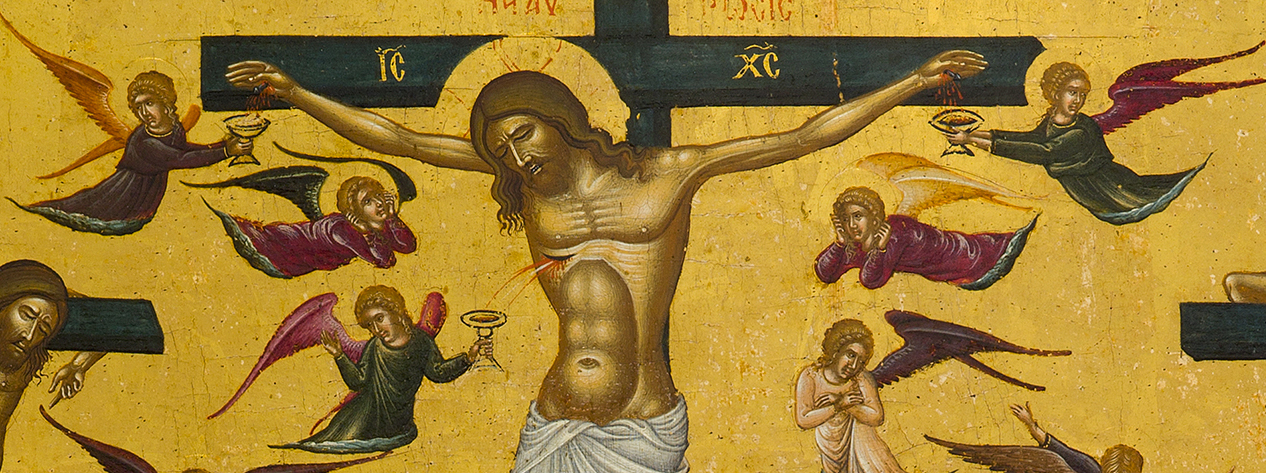
Seeing You upon the Cross, the hosts of angels in heaven shuddered: the stars lost their brightness; the earth quaked, and the whole universe trembled at the insults You endured, O Lord. By your sufferings You grant us salvation.
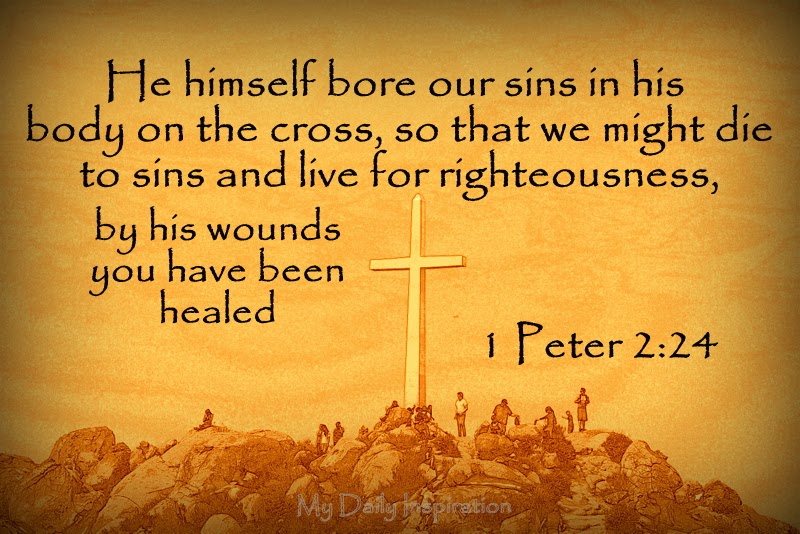
By Your wounds we have all been healed from our passions and from the sting of sin; when You were raised upon the Cross, You struck down our invisible Enemy. Grant that we may worthily complete this Fast, and without reproach, come to Your holy Resurrection.
Let us welcome Christ with joy and divine gladness. Behold the Fast, the time of repentance let us weep and sigh, and let us raise our hands to our only Redeemer, that He may save our souls.
The Lord is my help and my protection: He saved me. He is my God and I will glorify Him.
The Eternal Word comforts the three youths in the furnace of Babylon
You descended into the midst of the furnace and covered the Youths with dew, and you taught them to sing: all you works of the Lord, bless the Lord and praise Him forever. Mother of God, the Sun of justice comes forth you to illuminate the whole universe.
Jesus, the true God, Who sits in glory upon the divine throne, now appears, riding on a swift cloud: and with His pure hand He saves those who cry out: Glory to Your power, O Lord!
Christ is my strength, my Lord and my God! This is the hymn that the holy church proclaims, and with a purified heart she praises the Lord.
O Word, born of the Father before all time, we the faithful now offer You the intercession of the one who gave you birth; hear her prayer by showing yourself full f goodwill for your servants.
Intercession of the Virgin Mary
O Redeemer of the world and almighty One, You descended into the furnace and covered the three youths with dew, and You taught them to sing: all you works of the Lord, bless the Lord and praise Him above all forever.
By repentance, let us put away the leaven of sin: let us gird ourselves by mortifying our passions, let us put on sandals of holiness to avoid every path of sin; let us support ourselves with the staff of faith. Let us not imitate the enemies of the Cross who make gods of their bellies. Let us instead follow the One who is victorious over the Devil, the Savior of our souls!
Dulled by laziness, I have given in to the hypnosis of sin; but You, O Christ, who for my sake have fallen asleep on the ross, awaken me from my slumber that I may escape the darkness of death. Blinded by the passions of the flesh, my soul is overcome with darkness: the treacherous Enemy laughs when he sees me: save from his wickedness, O Christ, and enlighten me forever
Contemplating your death on the Cross, O Christ, your Virgin Mother wept bitterly: O my Son, what is this frightful mystery? You grant eternal life to all, how do You willingly suffer on this Cross both disgrace and death?
O Lord, grant repentance to me, a sinner, for You wish to save Your unworthy servant. I prostrate myself before You, and I implore Your immense goodness; humble my heart in this holy Fast, for in You alone I find refuge and compassion.
Seizing me in the trap of sensual pleasure, the Serpent has made his prisoner, but you, O holy apostles, whose word has caught the whole world in its net, deliver me from the evil one.
Night and day, in my anguish, I cry out to you, and I am saved by escaping my passions; and I am protected by your, O Virgin Mary, my refuge and only defense.
Unique and indivisible and omnipotent Trinity, Father, Son, and Spirit. You are my God, my Lord, and my Light; bowing low before You, I sing your praises.
I will be posting excerpts from Matins during the season.
By the Fast, let us crucify our members and our flesh; let us be vigilant in prayer as it is written: let us follow the steps of the divine Crucified One, but putting to death our passions.
Rejecting the bitterness of sin, let us strive to please our God, Who willed to taste gall, and destroyed the enemy by His Cross. By taking up the habit of sin, I am driven toward complete destruction. But You, O Lord, deliver me, by Your Cross, O God of goodness.
Abstinence has flourished on the tree of the Cross, and the universe, embracing it with fervor, shall enjoy the abundant flowering whic hblossoms from the divine precepts of Christ.
Abstaining from the passions, let is crucify our flesh, and our spirit for the Lord: let us mortify our desires and our thoughts, to ilve in the spirit of God. I praise Your crucifixion and Your side, which has been pierced by a lance. From it, I draw immortality O Christ, and each day I am sanctified.
If you are trying to decide whether or not to receive a COVID-19 vaccine, what follows may help you decide. Since faith in public health and medical authorities has taken a beating during the past year, I have assembled what I consider trustworthy points to consider.
What does the Church say about Catholics receiving COVID-19 vaccines?
In the Dec. 21 note on the morality of using some anti-COVID-19 vaccines, the Congregation for the Doctrine of the Faith (CDF) made two things clear. First, no one is obligated to receive a COVID-19 vaccine, stating that “it must be voluntary.” Second, those who are vaccinated can do so “in good conscience with the certain knowledge that the use of such vaccines does not constitute formal cooperation with abortion.”
In his urbi et orbi message on Christmas Day, Pope Francis referred to the “discovery of vaccines” as a “light of hope” that needs to be “available to all,” “especially the most vulnerable.”
How important is a vaccine to ending the pandemic?
If there was no public health response to the pandemic, it is estimated that about 1.4 million Americans would die. Over 340,000 Americans have died of COVID, and only about 6% of the U.S. population has tested positive. That means that after almost 10 months, we are only 7-10% of the way to a herd immunity threshold of 80-85%.
There are a growing number of deaths above historical averages due not only to COVID-19, but also to unintended consequences of reduced access to medical care in the spring, business closures and the response to the loneliness and isolation of sheltering-in-place.
The rationale for those drastic government measures — and incursions on our freedoms — was to protect people until successful vaccines or medical treatments were in place. While medical treatments (such as monoclonal antibody infusions) are only starting to be available, we now have what appear to be two successful vaccines in the United States capable of ending the pandemic’s effects on normal societal interaction.
Vaccines are the fastest way to end the pandemic and the governmental limits on our activities. In a recent interview I gave after receiving the first dose of the Pfizer vaccine, I commented that the release of that vaccine meant the beginning of the end of the pandemic.
How helpful are vaccines?
Vaccines are victims of their own success. Most of us did not grow up with neighbors and family members disfigured or dying from smallpox, attacked and crippled by polio, or pregnant mothers losing babies because of rubella. Now, vaccines are poised to end the greatest worldwide health crisis of our lifetime.
Do the approved vaccines (Pfizer and Moderna) prevent COVID-19 infections?
Do the approved vaccines prevent transmission of COVID-19 from those with an asymptomatic infection?
Yes. While Pfizer is studying that now, Moderna has released early results of an ongoing study showing that four weeks after one dose of vaccine there is a 63% reduction in asymptomatic cases and an 80% reduction in symptomatic cases. The results after a second dose will almost certainly be better.
Do the approved vaccines prevent severe cases of COVID-19?
Yes. Both the Pfizer and Moderna vaccines demonstrate a reduction in severe COVID-19 cases. Ongoing studies by both companies will determine effectiveness in reducing hospitalization and death due to COVID-19.
How do vaccine side effects compare to other vaccines given to adults?
Earlier in the year of COVID, I received two doses of (ethically-produced) Shingrix vaccine to prevent herpes zoster (shingle). Each dose gave me sweats, chills and fatigue for 24 hours. More than 17 million 50- to 60-year-olds have received this vaccine to prevent a skin disease that has a small potential for years of unremitting, localized pain and rarely leads to death in people with severely weakened immune systems. Having seen patients with this unremitting pain, I considered the side effects worth enduring.
The side effects for the second, more reactive dose of Pfizer and Moderna vaccines (70%/90% injection site pain, 37%/61% muscle aches, 60%/68% fatigue, 35%/48% chills and 16%/17% fever, respectively) are less than those reported for Shingrix, but somewhat more than those for the U.S. flu vaccine, where about 50% complain of injection site pain, 25% have muscle aches and 11% develop fatigue.
What about delayed onset side effects of the vaccines?
No new vaccine side effects have been found to occur in a recipient of any vaccine more than six weeks after reception, and only exceedingly rare ones occur more than a few weeks after vaccination.
How do the approved vaccines alter my genetic code?
They don’t. The mRNA from the vaccines made by Pfizer and Moderna do not enter the nucleus of our cells where our genetic code (DNA) is stored. After using our cells’ machinery to make spike protein, the mRNA is rapidly broken down.
Do the vaccines contain cells from aborted babies?
How were the cells of aborted babies involved in the development of the Pfizer and Moderna vaccines?
Both of the mRNA vaccines relied on the genetic sequence for the SARS-CoV-2 spike protein that was determined by another company that used HEK-293 (human embryonic kidney) cells (from a baby that either was aborted or miscarried in the 1970s). Also, some tests to prove that each vaccine stimulates cells to produce spike protein and express it on their surfaces were done in HEK-293 cells.
Do the vaccines cause infertility?
Some are concerned that COVID vaccines may increase infertility or cause miscarriages because of a similarity between the spike protein targeted by the vaccines and a protein called syncitin-1 that is necessary for normal development of the placenta. Some suggest that antibodies against spike might attack syncitin-1 and prevent placentas from forming normally.
The small portion of the similar protein sequence in syncitin-1 is buried beneath the surface of the protein, so anti-spike antibodies would not have access to bind to it. Animal studies looking for harm in developing fetuses have found none according to reports from Pfizer and Moderna.
Finally, mothers infected with COVID-19 also develop antibodies to spike protein and would have a similar risk of attacking syncitin-1 as those vaccinated. In a U.S. study of 598 pregnant women hospitalized with COVID-19, only 2.2% miscarried, compared to an expected rate of 10%. Therefore, this initial study does not suggest that an immune response to COVID-19 leads to increased miscarriage (one possible sign of faulty placental development).
What has the Church said about previous vaccines that relied on use of cells from aborted babies?
Other vaccines routinely received by American children have a similar or deeper connection to the use of cells of aborted babies. The only rubella, chicken pox and hepatitis A vaccines available in the United States today are produced using cell lines derived from babies aborted in the 1960s. Catholic concerns about reception of such vaccines led to this 2005 statement by the Pontifical Academy for Life allowing for the reception of such vaccines with certain responsibilities placed on those receiving them.
What are the responsibilities of those who decide to receive an ethically tainted vaccine?
Recipients of such vaccines are called to “oppose by all means (in writing, through the various associations, mass media, etc.) the vaccines which do not yet have morally acceptable alternatives, creating pressure so that alternative vaccines are prepared.”
What are some principles the Church recommends using when making prudential decisions like whether or not to receive a vaccine?
Respect for human dignity, the common good and solidarity.
How does respect for human dignity affect the decision to be vaccinated?
Using cells derived from aborted babies to carry out research or manufacture any product is an affront to human dignity. Receiving the mRNA vaccines is a form of appropriation, deriving good from some past evil act. Cooperation with evil means that one’s action contributes to continuing that act. A successful vaccine involving no appropriation from — or cooperation with — research and development with aborted cells is the goal.
At least six of the eight Operation Warp Speed vaccines used descendants of aborted fetal cells to perform tests (current Pfizer and Moderna vaccines) or to produce the vaccine itself (current Oxford/AstraZeneca vaccine not available in the U.S.).
The two vaccines with no apparent relationship with aborted fetal cells (produced by Sanofi-GSK and Merck IAVI) are both estimated to be available in late 2021.
While we are right to object to the use of aborted fetal cells in producing vaccines and should work for ethical alternatives, we should also realize — and work for a consistent ethic toward life — in other areas where our actions may contribute to abortion. While living in this valley of tears, our actions are tied into appropriating from — or contributing to — abortion when we do things that seem harmless like eating bananas, drinking coffee or buying goods made in China or by any company that contributes to Planned Parenthood.
What is the “common good,” and how does it affect a decision to receive a vaccine?
The Catechism of the Catholic Church states that the common good is “the sum total of social conditions which allow people, either as groups or as individuals, to reach their fulfillment more fully and more easily” (No. 1906). Overseeing the common good is the primary “reason that the political authority exists” (Compendium of the Social Doctrine of the Church (CDSC), No. 168). The Dec. 21 CDF document on COVID vaccines states, “In any case, from the ethical point of view, the morality of vaccination depends not only on the duty to protect one’s own health, but also on the duty to pursue the common good.”
What is solidarity?
Solidarity is the “firm and persevering determination to commit oneself to the common good … because we are all really responsible for all” (CDSC, No. 193). Solidarity is the way in which my individual acts can contribute to the common good.
How might concerns about the common good and solidarity lead to a decision to receive a vaccine?
People of goodwill want to reduce the risk of unwittingly infecting individuals at high risk for dying from COVID. Receiving a vaccine will not only protect me but also protect others with whom I share time and space. Mass vaccination is likely the fastest way to end pandemic-related limitations on human activity and reduce morbidity and mortality.
How might a desire to respect human dignity and live in solidarity lead to a decision not to receive a vaccine?
The human dignity of aborted babies must be defended in our culture. Some believe that because of the worldwide focus on vaccines, this is our best opportunity as a group to stand up and demand ethical alternatives to all vaccines. It has recently been suggested that those at very low risk of dying from COVID may elect to forego any vaccine that benefited from the use of aborted fetal cells in any way. In addition to forgoing reception, they are strongly encouraged to join a movement calling for ethical production of vaccines.
What are the responsibilities of those who decide not to receive a COVID-19 vaccine during the pandemic?
If some people choose for reasons of conscience not to receive a COVID-19 vaccine, the CDF writes that they “must do their utmost to avoid, by other prophylactic means and appropriate behavior, becoming vehicles for the transmission of the infectious agent.” The responsibility for solidarity with “those who are most vulnerable” remains whether by receiving a vaccine, or by practicing assiduously non-pharmaceutical interventions such as masking, distancing and limiting indoor gatherings.
What final thoughts might I consider?
I have discovered that asking myself the question, “What is the most loving response I can make in this situation?” helps me to clarify my actions.
Since I daily remove skin cancers from the faces of patients over 80 years of age (who have an COVID-19 infection fatality rate of 8-10%), thereby breathing within 12-18 inches of their unmasked faces (because that’s where their cancers are), I want to protect them as much as possible in case I contract COVID-19 and don’t realize it.
You may decide that the most loving thing you can do now is to forego a vaccine — when it is available to you — and make a principled and vocal stand for the ethical production of vaccines in solidarity with those humans who have been aborted.
Whatever decisions we make, doing so in solidarity out of a motive a charity will help clarify the decision-making process.
Thomas W. McGovern, MD, practices Mohs surgery and facial reconstruction in Fort Wayne, Indiana. He worked for two years at the US Army Medical Research Institute of Infectious Disease before his dermatology training and serves on the national board of the Catholic Medical Association.




 Father Christopher Zugger