Christ exhorted his followers to take up their crosses and follow him. To do so means to give up of oneself, just like Heraclius had to give up the signs of his power and wealth. Saint Barsunuphius the Great emphasized that when we carry our own crosses, we are mystically helping Jesus in His Passion when He carried the heaviest cross ever made, the cross through which the human race would be saved, and that by so doing, we are preparing to be His servants in the choir of heaven.
In the morning services on September 13, we commemorate the dedication of the Church of the Resurrection, known more commonly as the Church of the Holy Sepulcher. This shrine contains both Mount Calvary where Christ was crucified, and the adjacent grave donated by Joseph of Arimathea. Cross and resurrection are intertwined – there is no Easter Sunday without Good Friday, and the sorrow of Good Friday always leads to the joy and power of the Resurrection.
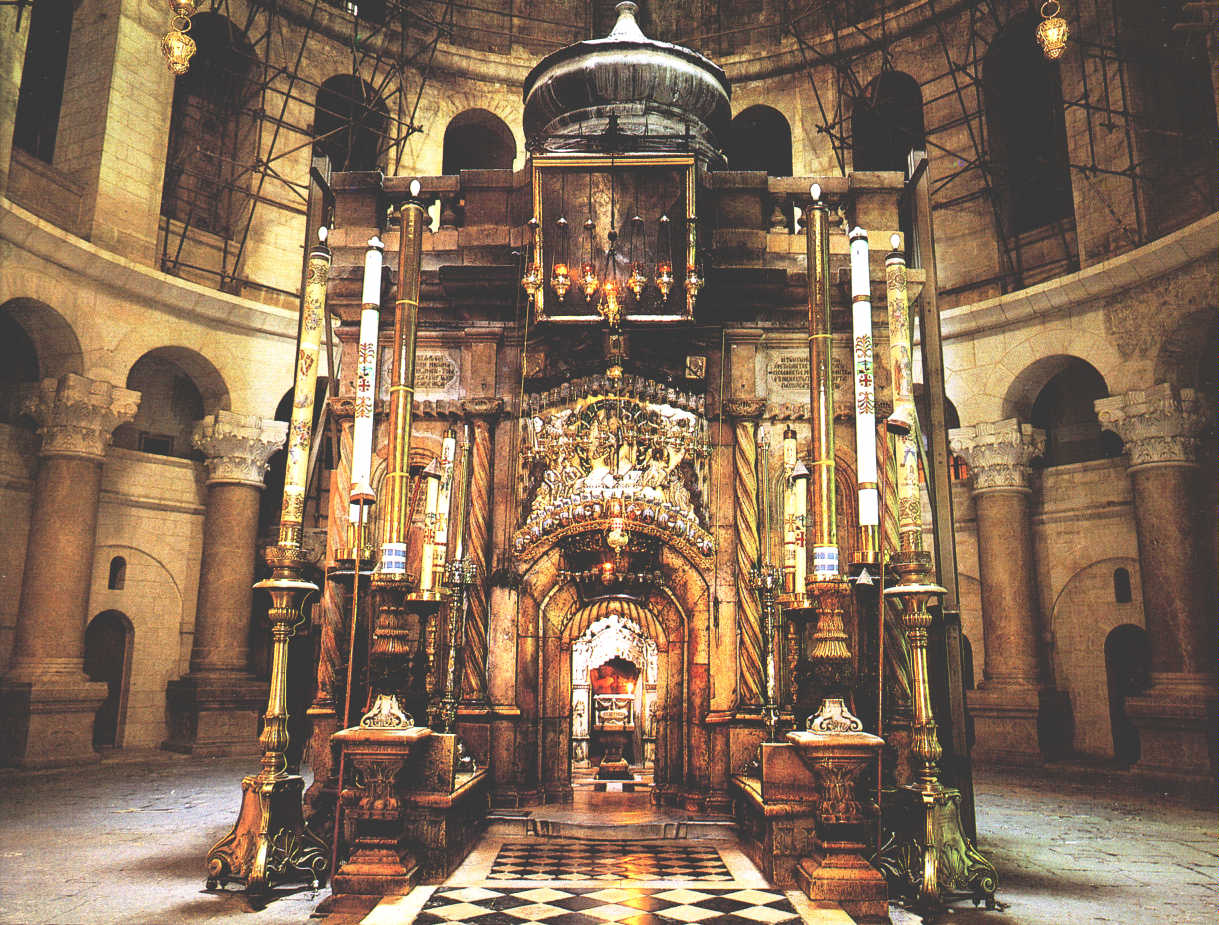
That promise of Saint Barsanuphius is most fitting therefore: what could be greater than to achieve eternal life with our Crucified and Risen Lord in glory? At the end of time, Christ will raise the dead, bringing the souls of those in glory to be reunited with their restored bodies that were left behind at death. The paradox of the message of the Cross is that it is not what it seems to be, an instrument of humiliation and death, but rather it is the instrument of joy and life, life that is eternal.
The Old Testament readings for this feast give a series of foreshadowing of the cross as our instrument of salvation, and the Christian looks at those events and sees that paradox of the Cross at work.
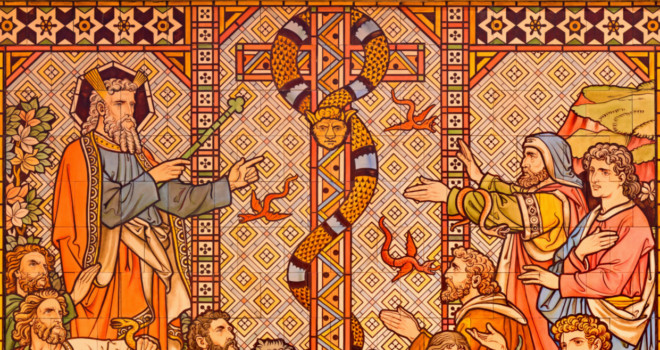
In Genesis we read about the tree of Eden, by which we were lost (the tree of the Cross saves us); Noah’s ark brings about the salvation of the just ( while the Cross offers salvation to sinners); Jacob crosses his hands to bless his grandsons Ephraim and Manasseh, the sons of the patriarch Joseph. In Exodus Moses repeatedly opens his arms in the shape of a cross, and uses wood. He extends his arms to open a dry path through the Red Sea as a door of salvation to the Israelites; he throws wood into the waters of Mara to sweeten its bitterness, as the Cross which should be a bitter instrument actually is healing; Moses strikes the rock with his staff to make life-giving water spring forth, as on the Cross Jesus’ life-giving blood and water pour out; Moses prays with hands crossed, for the victory of the Jewish people over Amalek. Aaron’s rod of dead wood blossoms into new life, just as the supposed dead wood of the Cross actually brings spiritual life; and the bronze serpent made by Moses brings healing to those bitten by the poisonous serpents, as the cross brings life to us who have been bitten by original sin.
In the early Church, making the sign of the cross was so important that it was considered as the 8th sacrament. Saint Cyril of Jerusalem exhorted his congregation to make it on their foreheads, over their food and drink, when going to sleep and getting out of bed, when traveling, even when going in and out of the house or shop. He called it the Sign of the faithful, and the dread of devils: for Jesus triumphed over them in it, having made a show of them openly for when they see the Cross they are reminded of the Crucified; they are afraid of Him, who bruised the head of the serpent.
The story of the discovery of the Cross in Jerusalem says that it was applied to a sick woman who was cured, and to a dead man who was restored life, showing that it is indeed the life-giving Cross: just as it gave life to those two people so it brings life to our souls. When the army of the Emperor Heraclius recaptured the True Cross from the pagan Persians in 614, the emperor tried to carry it back into the church of the Holy Sepulcher. But the story of that event says this: the Emperor, magnificently dressed and wearing gold, was stopped by an invisible force. Zachary, the patriarch of Jerusalem, said to him: “Be careful, Emperor, because with these ornaments of triumph, you don’t imitate sufficiently the poverty of Jesus Christ and the humility with which He carried His Cross.” The Emperor laid aside his splendid clothes to dress himself in an ordinary cloak, and with bare feet, he was able to continue on his way.
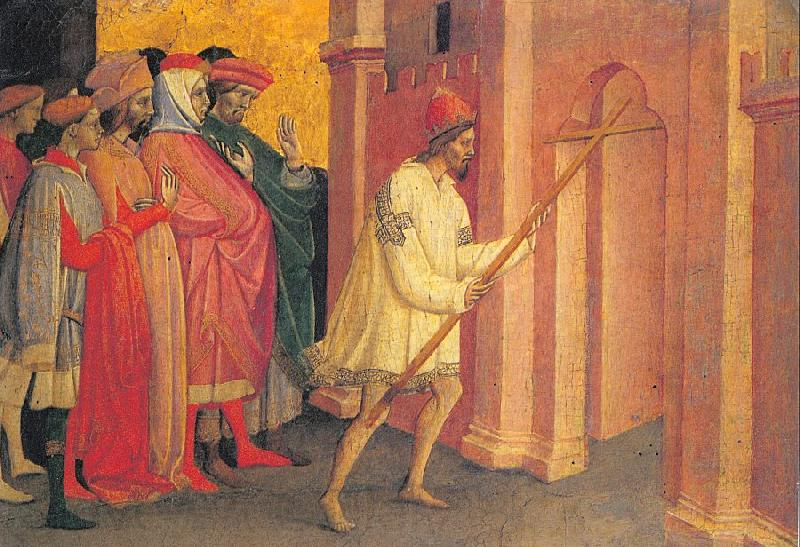
Once again, we see the paradox at work – power, gold, and wealth were actually what kept Heraclius out of the shrine. Only by lowering himself in the eyes of the world, by going barefoot and in plain clothing, could he return the True Cross to Mount Calvary inside the shrine. And that action raised him up in the eyes of God, so that the invisible barrier in the doorway was removed, and he could go inside and worship Christ our God at those two powerful places: the site where the Lord died for us, and the site where the same Lord rose for us.
The same holds true for us in the spiritual life – if we are keeping ourselves powerful in the eyes of the fallen world, if we are ashamed of wearing the cross or blessing ourselves with the sign of the cross, then we are going to lose our way. If we hold firm throughout all of our sufferings, if we hold firm despite the temptation to abandon Jesus and His teachings and His Church, if we hold firm through the power of the Cross, then we will find our way to glory, and into the waiting embrace of the Holy Trinity at the time of our passing from this life to the life that awaits us. Christ is among us.
 Father Christopher Zugger
Leave a comment