Christ used hyperbole a lot – it was a common thing in first-century Palestine. Authors and storytellers used wild examples to get people’s attention.
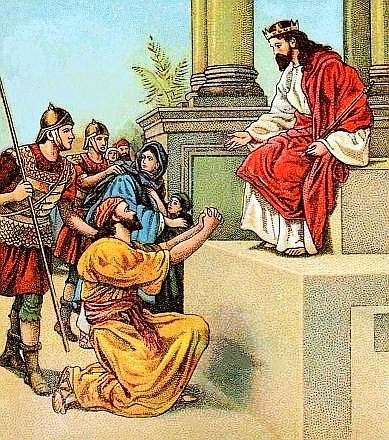
The parable from today’s gospel mentions 10,000 talents of silver – a spectacular amount of money that could never be paid back in full. The crowd would have laughed when they heard the servant say I will pay you back, just be patient. There was no way he could ever pay it back: it comes out to $226 million in today’s currency. Nobody could pay back such an amount. The other servant meanwhile truly did owe a fraction – about 100 days’ wages, which could indeed be paid back and was nothing compared to $226 million.
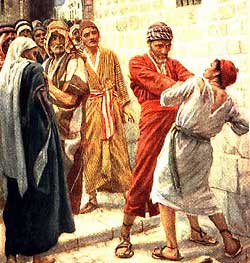
So too, can I ever pay back God for what Jesus Christ has done for me? Can I make up to Christ what He endured in His Passion and Death? It’s impossible.
We are taught in our American culture to be tough, to be hard, to win. We may even have been taught to withhold forgiveness, to hold on to grudges, which in turn just feeds our anger.
Evagrius of Pontus wrote that anger is destructive, it is boiling up against the presumed wrongdoer all day long. Over time, anger will weaken not only the soul but even the body, and our anger will find its way into society and weaken the Christian world.
Isn’t this what we see now? Everywhere I go, people mention how disturbing it is that folks get so angry over basically nothing, how short tempers are. I know of families disrupted by politics, disagreements, fighting over topics. For what? To prove “I’m right”?
Saint Titus Brandsma was a Dutch Carmelite priest arrested by the Nazis in 1942. He was an unassuming fellow, nicknamed Father Shorty, wearing glasses, and he came to the attention of the Nazis after they occupied Holland in 1940. He had started his anti-Nazi actions by writing against the anti-Jewish laws in 1935. He wrote that no Catholic publication could publish Nazi propaganda and still call itself Catholic. The attention paid to him by the Nazis gradually and dramatically increased. The Gestapo were following Father Titus continually. Wherever he went or whatever he did, the always-aware Gestapo made their presence known. One day, Father “Shorty” was on a mission to deliver a letter from the Conference of Catholic Bishops to the editors of Catholic newspapers. The letter ordered these publications not to print official Nazi documents (a new “law” passed by the Nazis demanded they do this). Father Titus had delivered the letter to 14 editors when the Gestapo arrested him.
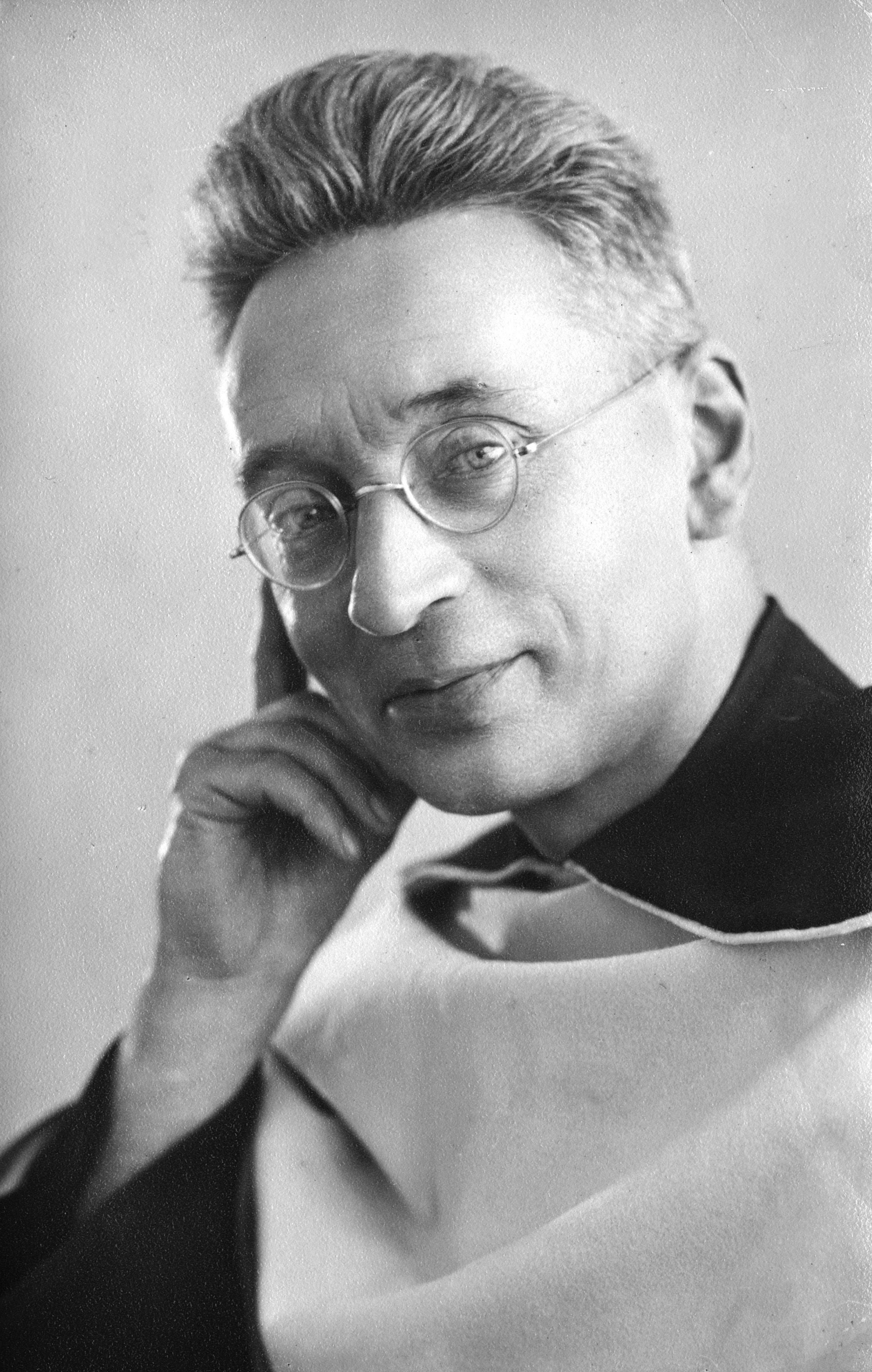
Father Titus was moved from prison to prison until finally, on June 19, 1942, he was imprisoned in Dachau. This was the Nazis’ first concentration camp, and it had the “priests barracks,” where more than 2,500 priests and religious were confined there. Father’s health quickly deteriorated at Dachau. The lack of food, daily beatings, and harsh, unimaginable living conditions all combined to break a person quickly. Within a few weeks of his arrival, he was so sick that he was transferred to the camp “hospital” and he was used for medical experimentation. When he was too sick for that, the doctor ordered that he be killed. On July 26, 1942, a Nazi camp nurse who had abandoned her Catholic faith was ordered to give him an injection of carbolic acid. Father Titus handed the woman his rosary. He forgave her for following the order, and for her treatment of him, and he said to her, “What an unfortunate girl you are. I shall pray for you.” She was so impressed by him that she returned to the Church, and attended the Mass in which he was declared a Blessed in 1985.
Whose forgiveness did he give? God’s. Whose forgiveness do I give when I let go of a grudge? God’s. We say “I forgive” but we as Christians, as children of God, as brothers and sisters of Jesus Christ, cannot forgive unless we have had God’s mercy first. Jesus used hyperbole, but not when he was talking about God’s love and mercy. That he never exaggerated. God’s forgiveness is enormous – when a person comes to confession it can be after 10 or 20 years, or it can be after a few days, but God’s mercy still happens. God waits for us – one of the key elements in the parable of the prodigal son is that the father is watching, waiting for the son to return home. Titus Brandsma did not have to forgive that nurse. He could have just said I’ll pray for you. But he not only forgave her for killing him, he gave her the most precious thing that he had saved from the Nazi guards through his suffering in Dachau, his rosary.
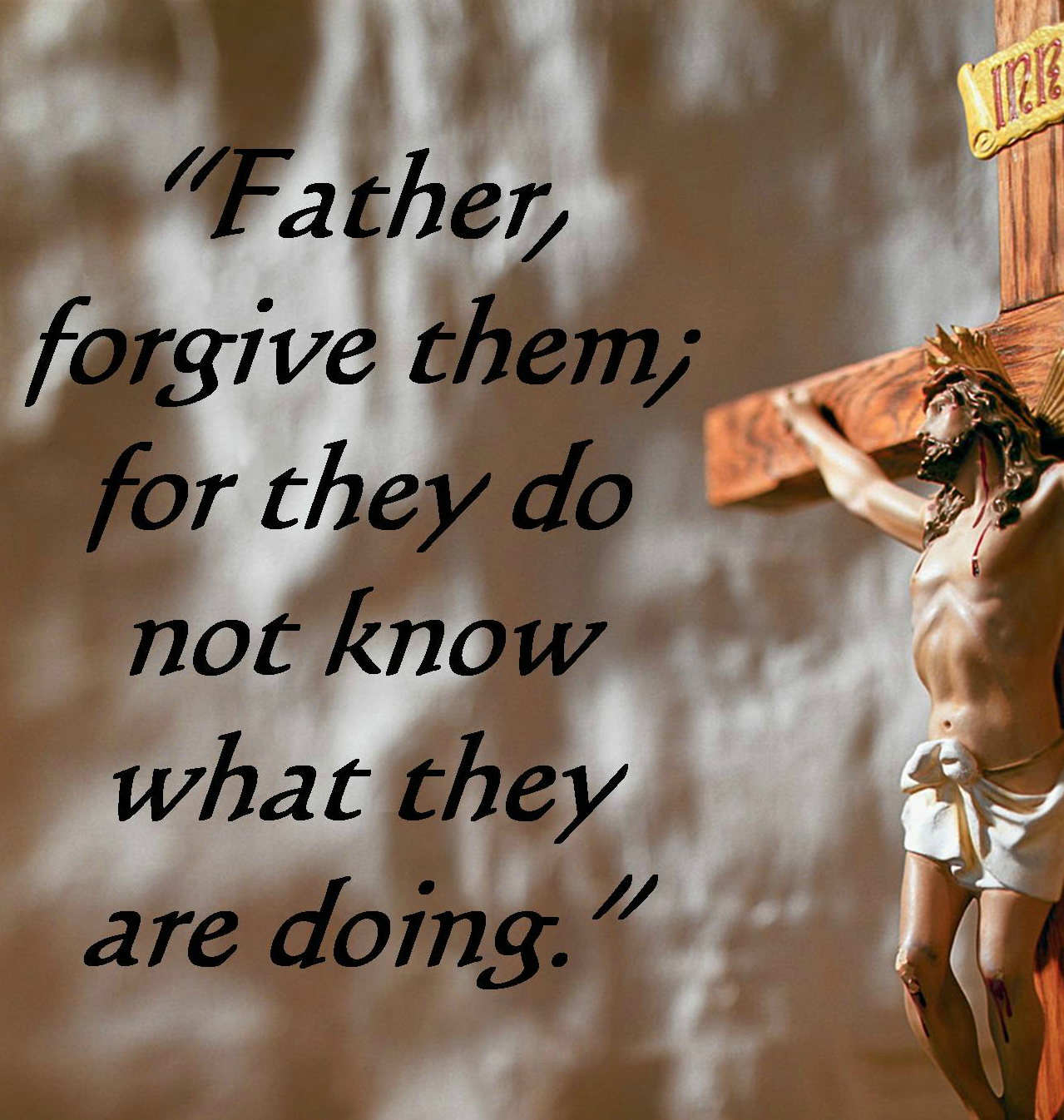
Forgiveness is not weakness – it shows courage. Titus Brandsma was exceptionally brave to defend the freedom of the Catholic press against a wicked system that he had fought against for seven years. Jesus knowingly and willingly entered into the Passion on Holy Thursday night. The first two words in the first sentence of Jesus’ Seven Last Words on the Cross was what? Forgive them. Yet we as Americans now too often see forgiveness and charity to others as a sign of weakness instead of bravery and generosity of spirit.
Every martyr since Christ has done the same thing, forgiven those killing them. To hear someone say I will never forgive should be painful to our ears, to our hearts, to our consciences, to our souls. No matter how awful, no matter how unjustified it is what was done to us, if we hold on to a grudge, if we hate, if we stay angry – we are not imitating Jesus, we are not in union with God Himself. We are only feeding the armies of Satan, and contributing, as Evagrius of Pontus warned, to the weakening of the Christian world.
If you are holding onto some anger, let go. If you aren’t, then pray for those who are, and implore God’s mercy to pour into their hearts. And pray for our nation, to be healed of the many hurts that seem to linger after the years of Covid. The Roman Empire was converted to Christ and His Gospel because Tertullian wrote in the late 200s, pagans would constantly say See how they love one another how they are ready even to die for one another. The early generations of Christians fulfilled the commandment that Jesus gave to the apostles at the Last Supper: Love one another as I have loved you. May we all have the courage to forgive, and to do so with a willing heart. Christ is among us.
 Father Christopher Zugger
Leave a comment